

Top 50 Commercial Kitchen Fire Safety Issues That Can Lead to Inspection Violations
Every Commercial Kitchen Has Hidden Fire Risks Commercial kitchens operate in fast-paced environments where fire safety can easily take a back seat to daily operations. Over time, grease accumulates, equipment wears out, electrical systems become overloaded, and...

Understanding NFPA 96 Hood Cleaning Guidelines: What Every Commercial Kitchen Needs to Know
Understanding NFPA 96 Hood Cleaning Guidelines For commercial kitchens, fire safety goes far beyond having fire extinguishers and suppression systems. One of the most important standards governing kitchen fire prevention is NFPA 96, the nationally recognized standard...
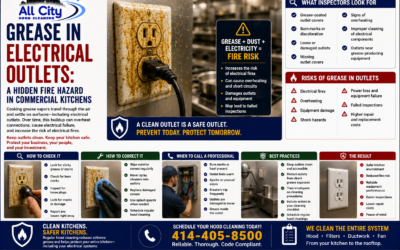
Grease in Electrical Outlets: A Hidden Fire Hazard in Commercial Kitchens
Grease in Electrical Outlets: A Hidden Fire Hazard in Commercial Kitchens Commercial kitchens produce more than heat and great food. Every day, cooking vapors containing grease particles travel through the air and settle on nearly every exposed surface. While most...
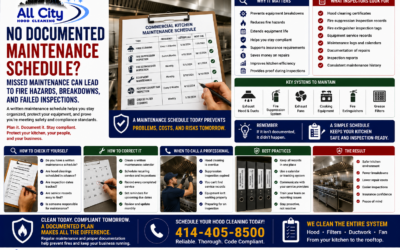
No Documented Maintenance Schedule: Why Every Commercial Kitchen Needs a Preventive Maintenance Plan
No Documented Maintenance Schedule: Why Every Commercial Kitchen Needs a Preventive Maintenance Plan Running a commercial kitchen involves much more than preparing great food. Equipment, fire protection systems, ventilation components, and cleaning schedules all...
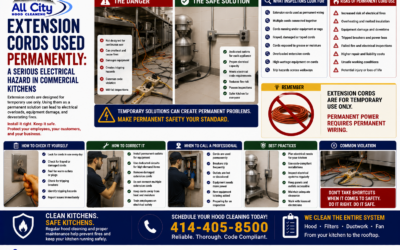
Extension Cords Used Permanently: A Serious Electrical Hazard in Commercial Kitchens
Extension Cords Used Permanently: A Serious Electrical Hazard in Commercial Kitchens Commercial kitchens rely on dozens of electrical appliances to prepare food safely and efficiently. Mixers, slicers, coffee equipment, warmers, refrigerators, freezers, and other...
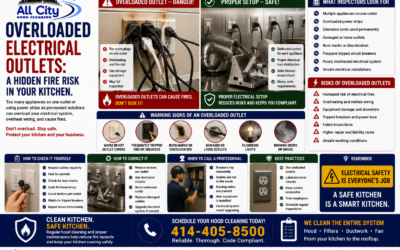
Overloaded Electrical Outlets: A Hidden Fire Risk in Commercial Kitchens
Overloaded Electrical Outlets: A Hidden Fire Risk in Commercial Kitchens Commercial kitchens depend on electricity to power everything from refrigerators and freezers to mixers, coffee machines, warming equipment, and point-of-sale systems. As kitchens grow and...
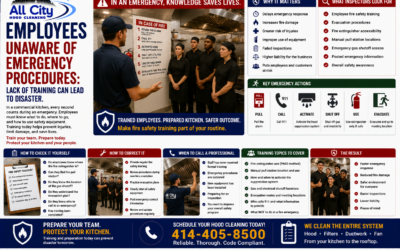
Employees Unaware of Emergency Procedures: Why Fire Safety Training Matters in Commercial Kitchens
Employees Unaware of Emergency Procedures: Why Fire Safety Training Matters in Commercial Kitchens Commercial kitchens are fast-paced environments where employees work around open flames, hot cooking equipment, grease, natural gas, and electrical appliances every day....
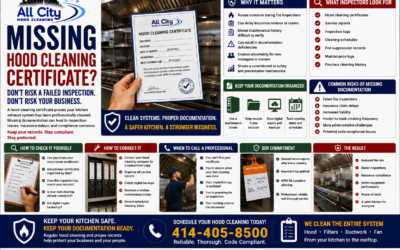
Missing Hood Cleaning Certificate: Why Proper Documentation Matters for Commercial Kitchens
Missing Hood Cleaning Certificate: Why Proper Documentation Matters for Commercial Kitchens Professional hood cleaning helps remove grease from your commercial kitchen exhaust system, reducing fire hazards and improving overall safety. However, completing the cleaning...
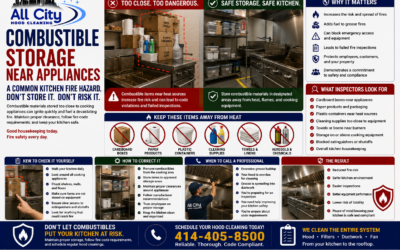
Combustible Storage Near Appliances: A Common Commercial Kitchen Fire Hazard
Combustible Storage Near Appliances: A Common Commercial Kitchen Fire Hazard Commercial kitchens are busy environments where space is often limited. Boxes of supplies, paper products, plastic containers, towels, cleaning chemicals, and other materials are frequently...
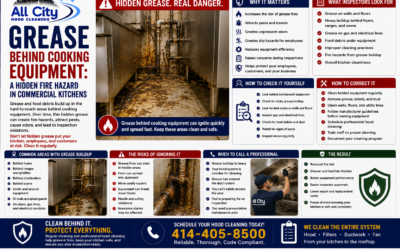
Grease Behind Cooking Equipment: A Hidden Fire Hazard in Commercial Kitchens
Grease Behind Cooking Equipment: A Hidden Fire Hazard in Commercial Kitchens When most people think about commercial kitchen cleaning, they picture wiping down countertops, cleaning fryers, or maintaining the kitchen hood. However, one of the most commonly overlooked...