
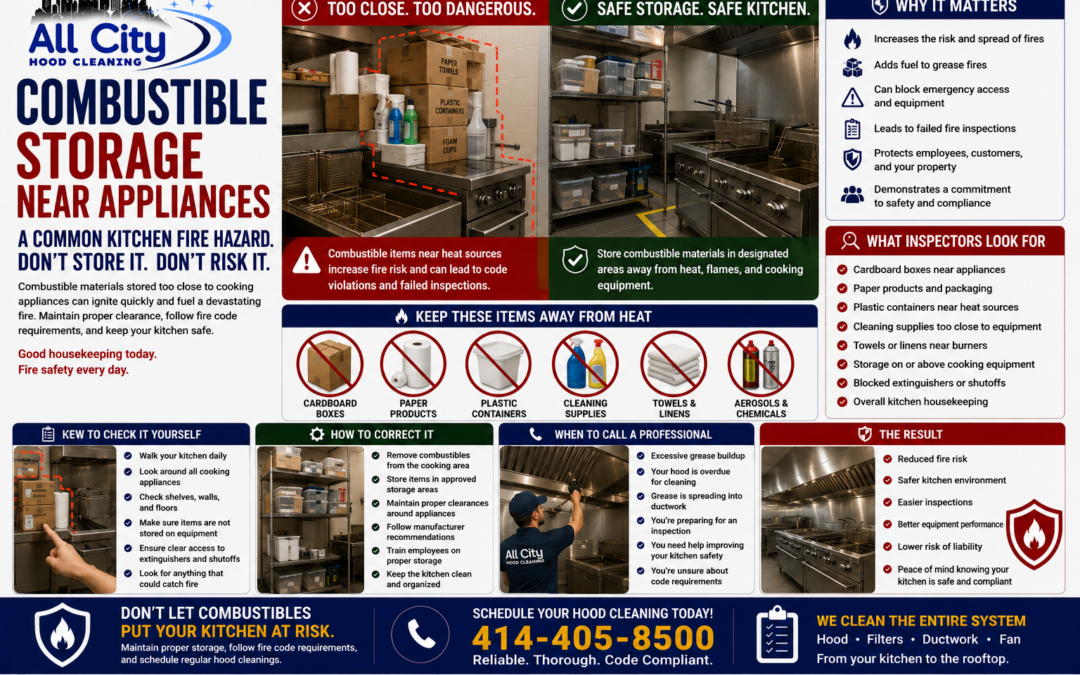
Combustible Storage Near Appliances: A Common Commercial Kitchen Fire Hazard
Commercial kitchens are busy environments where space is often limited. Boxes of supplies, paper products, plastic containers, towels, cleaning chemicals, and other materials are frequently stored wherever room is available. Unfortunately, placing combustible materials too close to cooking appliances is one of the most common fire safety issues found during inspections.
Combustible storage near appliances can significantly increase the risk of fire. Commercial fryers, ranges, ovens, charbroilers, griddles, salamanders, and other cooking equipment generate high temperatures that can ignite nearby combustible materials. Even if an item never comes into direct contact with a flame, prolonged exposure to heat can increase the likelihood of ignition.
Whether you operate a restaurant, school cafeteria, hospital, hotel, nursing home, brewery, casino, church kitchen, food truck, or another commercial cooking facility, maintaining safe clearance around cooking equipment is an important part of protecting your employees, customers, and property.
Why It Matters
Cooking equipment is designed to produce heat safely, but nearby combustible materials can quickly become fuel if a fire starts.
Improper storage near appliances can:
- Increase the spread of a kitchen fire.
- Create additional fuel for grease fires.
- Block emergency access to equipment.
- Interfere with ventilation around appliances.
- Increase property damage.
- Lead to failed fire inspections.
- Create unnecessary safety hazards for employees.
Good housekeeping and proper storage practices are among the simplest ways to reduce fire risks.
What Inspectors Look For
Fire inspectors routinely evaluate the area surrounding commercial cooking equipment.
They may look for:
- Cardboard boxes stored beside fryers or ovens.
- Paper products near cooking equipment.
- Plastic containers exposed to heat.
- Cleaning supplies stored next to appliances.
- Towels or rags hanging near burners.
- Combustible decorations near cooking areas.
- Storage blocking emergency shutoffs or fire extinguishers.
Maintaining proper clearance around cooking equipment demonstrates a commitment to fire safety and code compliance.
How To Check It Yourself
Kitchen managers should inspect the cooking line daily.
Look for:
- Boxes stacked beside equipment.
- Disposable paper products stored too close.
- Cleaning chemicals near heat sources.
- Plastic bins exposed to hot surfaces.
- Linens or towels hanging near burners.
- Supplies stored on top of cooking appliances.
- Crowded workspaces that reduce safe clearance.
If something could easily catch fire because of its location, it should be moved immediately.
How To Correct It
If combustible materials are stored near appliances:
- Remove combustible items from the cooking area.
- Store supplies in designated storage locations.
- Keep required clearances around cooking equipment.
- Train employees on proper storage procedures.
- Conduct routine kitchen safety inspections.
- Include storage practices in employee safety training.
- Maintain good housekeeping throughout the kitchen.
Simple organizational improvements can significantly reduce fire hazards.
When To Call A Professional
Contact a professional hood cleaning company or fire safety professional if:
- Grease buildup is increasing fire hazards.
- Storage practices have become difficult to manage.
- Your kitchen layout limits safe clearance.
- You’re preparing for a fire or insurance inspection.
- You need recommendations for improving kitchen safety.
- Your hood cleaning service is overdue.
Professional hood cleaning helps remove grease from the hood, filters, ductwork, and rooftop exhaust fan, reducing one of the primary fuel sources that can contribute to commercial kitchen fires.
Related Articles
Continue learning about commercial kitchen fire safety:
- Grease Behind Cooking Equipment
- Improper Clearance Around the Hood
- Manual Shutoffs Blocked
- Gas Shutoff Issues
- Missing Class K Fire Extinguisher
- Expired Extinguisher Inspection
- Understanding NFPA 96 Hood Cleaning Guidelines
- Top 50 Commercial Kitchen Fire Safety Issues That Can Lead to Inspection Violations
Schedule Service
Proper storage practices and routine hood cleaning work together to reduce fire risks in commercial kitchens. Keeping combustible materials away from cooking equipment helps create a safer work environment and prepares your facility for inspections.
All City Hood Cleaning proudly provides professional commercial kitchen hood cleaning services throughout Wisconsin for restaurants, schools, hospitals, nursing homes, hotels, breweries, casinos, food trucks, churches, manufacturing facilities, and many other commercial kitchens.
Our experienced technicians thoroughly clean your kitchen exhaust system, including the hood, grease filters, ductwork, and rooftop exhaust fan. During every service, we inspect for excessive grease buildup and visible safety concerns that may affect inspection readiness, helping you maintain a cleaner, safer commercial kitchen.
Contact All City Hood Cleaning today at 414-405-8500 for a free estimate and let us help keep your commercial kitchen clean, safe, compliant, and ready for its next inspection.