
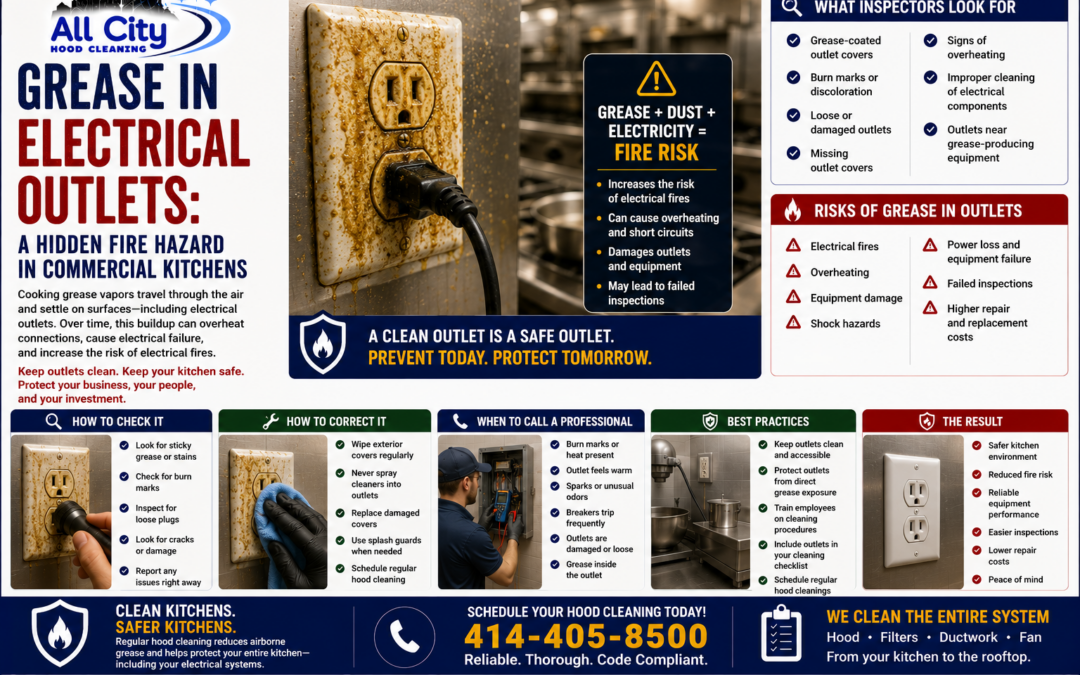
Grease in Electrical Outlets: A Hidden Fire Hazard in Commercial Kitchens
Commercial kitchens produce more than heat and great food. Every day, cooking vapors containing grease particles travel through the air and settle on nearly every exposed surface. While most operators recognize the importance of cleaning hoods, filters, and cooking equipment, one often-overlooked hazard is grease inside or around electrical outlets.
Grease contamination around electrical outlets may seem like a minor housekeeping issue, but it can become a serious fire hazard over time. Grease attracts dust, traps moisture, and creates a conductive film that may interfere with electrical connections. Combined with the high temperatures and heavy electrical demands of a commercial kitchen, this buildup can increase the risk of overheating, electrical shorts, equipment damage, and even fires.
Whether you operate a restaurant, hospital, school cafeteria, nursing home, hotel, brewery, casino, food truck, church kitchen, or another commercial cooking facility, keeping electrical outlets clean and protected should be part of your overall kitchen safety program.
Why It Matters
Electrical outlets are designed to operate in clean, dry conditions. Commercial kitchens are anything but clean and dry. Heat, steam, grease vapor, and moisture constantly circulate throughout the cooking area, allowing contaminants to build up around outlets over time.
Grease buildup can:
- Increase the risk of electrical fires.
- Cause overheating.
- Damage electrical receptacles.
- Reduce electrical reliability.
- Create shock hazards.
- Lead to equipment malfunctions.
- Result in failed fire or insurance inspections.
- Shorten the life of electrical components.
Even small amounts of grease can become problematic when combined with dust and moisture.
What Inspectors Look For
Fire inspectors and electrical inspectors routinely check for electrical hazards throughout commercial kitchens.
They may look for:
- Grease-coated outlet covers.
- Burn marks around receptacles.
- Loose or damaged outlets.
- Missing outlet covers.
- Signs of overheating.
- Electrical outlets located near heavy grease-producing equipment.
- Improperly cleaned electrical components.
- Unsafe wiring practices.
Visible grease contamination may indicate that cleaning procedures need improvement.
How To Check It Yourself
Kitchen managers should inspect electrical outlets during routine cleaning and safety inspections.
Look for:
- Sticky grease on outlet covers.
- Yellow or brown grease stains.
- Dust collecting in greasy areas.
- Cracked or damaged outlet covers.
- Loose electrical plugs.
- Burn marks or discoloration.
- Unusual odors coming from outlets.
Never spray cleaners directly into electrical outlets or attempt to clean inside energized electrical equipment.
How To Correct It
If grease is present around electrical outlets:
- Wipe exterior outlet covers using appropriate cleaning methods.
- Never allow grease to accumulate near electrical receptacles.
- Replace cracked or damaged outlet covers.
- Keep outlets protected from direct grease exposure.
- Install splash guards where appropriate.
- Include outlets in your routine kitchen cleaning checklist.
- Schedule professional hood cleaning to reduce airborne grease throughout the kitchen.
Reducing grease throughout the kitchen helps protect not only your exhaust system but also your electrical infrastructure.
When To Call A Professional
Contact a licensed electrician immediately if:
- Grease has entered the electrical outlet.
- You notice burn marks.
- The outlet feels warm.
- Equipment loses power unexpectedly.
- Sparks occur when plugging in equipment.
- Breakers trip repeatedly.
- You smell burning odors near an outlet.
Electrical repairs should always be performed by qualified professionals. Never attempt to disassemble or repair grease-contaminated electrical outlets yourself.
Related Articles
Continue learning about commercial kitchen fire safety:
- Overloaded Electrical Outlets
- Extension Cords Used Permanently
- Combustible Storage Near Appliances
- Grease Behind Cooking Equipment
- Excessive Grease Inside the Hood Canopy
- Grease Accumulation Inside Ducts
- Understanding NFPA 96 Hood Cleaning Guidelines
- Top 50 Commercial Kitchen Fire Safety Issues That Can Lead to Inspection Violations
Schedule Service
Airborne grease doesn’t only collect inside your kitchen hood. It settles throughout your entire kitchen, including walls, ceilings, equipment, lighting fixtures, and even electrical outlets. Regular hood cleaning helps reduce the amount of grease circulating through your kitchen, creating a cleaner and safer work environment.
All City Hood Cleaning proudly provides professional commercial kitchen hood cleaning services throughout Wisconsin for restaurants, schools, hospitals, nursing homes, hotels, breweries, casinos, food trucks, churches, convenience stores, manufacturing facilities, and many other commercial kitchens.
Our experienced technicians thoroughly clean your commercial kitchen exhaust system, including the hood, filters, ductwork, and rooftop exhaust fan. During every service, we inspect for visible grease buildup and other maintenance concerns that may affect safety or inspection readiness. If we observe grease contamination around electrical equipment or other potential hazards, we’ll recommend that they be evaluated by a licensed electrician.
Contact All City Hood Cleaning today at 414-405-8500 for a free estimate and let us help keep your commercial kitchen cleaner, safer, and ready for its next inspection.