
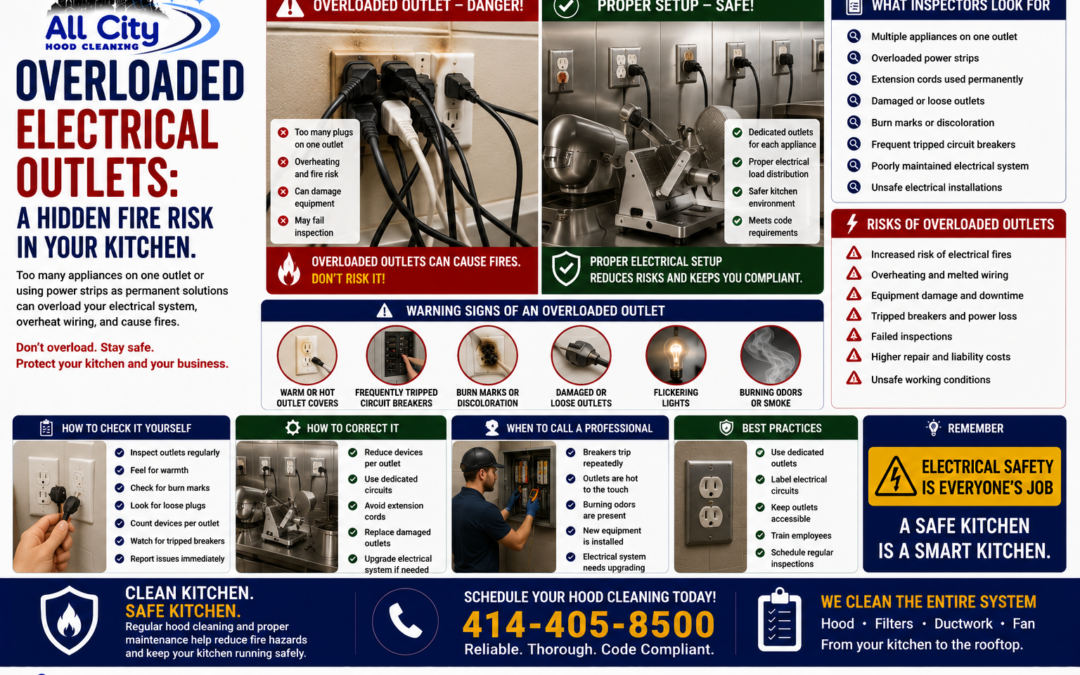
Overloaded Electrical Outlets: A Hidden Fire Risk in Commercial Kitchens
Commercial kitchens depend on electricity to power everything from refrigerators and freezers to mixers, coffee machines, warming equipment, and point-of-sale systems. As kitchens grow and equipment is added over time, it can be tempting to plug multiple appliances into the same outlet or use power strips as a permanent solution. Unfortunately, overloaded electrical outlets can create significant fire and safety hazards.
Electrical overloads generate excess heat that can damage wiring, melt insulation, and increase the risk of electrical fires. Combined with the heat, grease, and moisture commonly found in commercial kitchens, overloaded outlets become an even greater concern.
Whether you operate a restaurant, school cafeteria, hospital, hotel, nursing home, brewery, casino, church kitchen, food truck, convenience store, or another commercial cooking facility, maintaining a safe electrical system is an important part of protecting your employees, customers, and property.
Why It Matters
Commercial kitchen equipment often draws substantial electrical power. When too many devices share a single circuit, the electrical system can become overloaded.
Overloaded electrical outlets can:
- Increase the risk of electrical fires.
- Damage expensive kitchen equipment.
- Cause circuit breakers to trip frequently.
- Create unexpected equipment shutdowns.
- Overheat wiring and electrical components.
- Lead to failed fire or electrical inspections.
- Increase repair and maintenance costs.
Keeping electrical loads properly distributed helps improve both safety and equipment reliability.
What Inspectors Look For
Fire inspectors and electrical inspectors routinely examine commercial kitchens for potential electrical hazards.
They may look for:
- Multiple appliances plugged into one outlet.
- Overloaded power strips.
- Extension cords used as permanent wiring.
- Damaged electrical outlets.
- Loose electrical connections.
- Burn marks or discoloration around outlets.
- Proper clearance around electrical panels.
- Overall condition of the electrical system.
Visible signs of electrical overload often require immediate correction to reduce fire risks.
How To Check It Yourself
Kitchen managers should periodically inspect all electrical outlets throughout the facility.
Look for:
- Power strips overloaded with equipment.
- Multiple high-powered appliances on one outlet.
- Warm or hot outlet covers.
- Flickering lights.
- Frequently tripped circuit breakers.
- Burn marks or unusual odors.
- Loose plugs that no longer fit securely.
If an outlet feels hot or shows signs of damage, discontinue use and have it inspected immediately.
How To Correct It
If overloaded outlets are identified:
- Reduce the number of appliances connected to one outlet.
- Avoid using extension cords as permanent solutions.
- Use dedicated circuits for high-demand equipment.
- Replace damaged outlets promptly.
- Schedule electrical upgrades when necessary.
- Train employees to report electrical concerns.
- Include electrical inspections in your preventative maintenance program.
Proper electrical planning helps reduce fire risks and improve equipment performance.
When To Call A Professional
Contact a licensed electrician if:
- Circuit breakers trip repeatedly.
- Outlets feel hot during operation.
- You notice burning odors.
- Electrical outlets are damaged.
- Lights flicker when equipment starts.
- You’re installing new commercial cooking equipment.
- You’re preparing for a fire or insurance inspection.
Electrical repairs and upgrades should always be performed by qualified professionals who are familiar with commercial kitchen electrical systems.
Related Articles
Continue learning about commercial kitchen fire safety:
- Combustible Storage Near Appliances
- Poor Housekeeping
- Gas Shutoff Issues
- Manual Shutoffs Blocked
- Missing Class K Fire Extinguisher
- Expired Extinguisher Inspection
- Employees Unaware of Emergency Procedures
- Understanding NFPA 96 Hood Cleaning Guidelines
- Top 50 Commercial Kitchen Fire Safety Issues That Can Lead to Inspection Violations
Schedule Service
Electrical safety is just one part of maintaining a safe commercial kitchen. Regular hood cleaning, preventative maintenance, and routine inspections all work together to reduce fire hazards and keep your kitchen operating efficiently.
All City Hood Cleaning proudly provides professional commercial kitchen hood cleaning services throughout Wisconsin for restaurants, schools, hospitals, nursing homes, hotels, breweries, casinos, food trucks, churches, manufacturing facilities, and many other commercial kitchens.
Our experienced technicians thoroughly clean your commercial kitchen exhaust system, including the hood, grease filters, ductwork, and rooftop exhaust fan. During every service, we inspect for visible safety concerns, excessive grease buildup, and maintenance issues that may affect inspection readiness. While we do not perform electrical repairs, we will notify you if we observe visible conditions that should be evaluated by a licensed electrician.
Contact All City Hood Cleaning today at 414-405-8500 for a free estimate and let us help keep your commercial kitchen exhaust system clean, safe, compliant, and ready for its next inspection.