
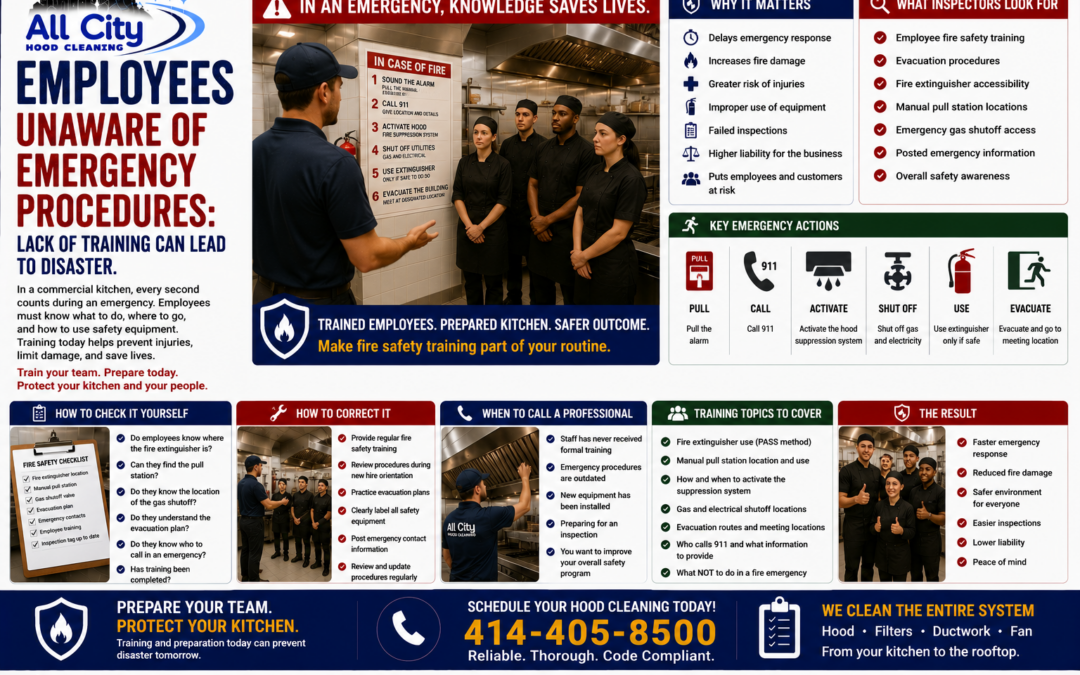
Employees Unaware of Emergency Procedures: Why Fire Safety Training Matters in Commercial Kitchens
Commercial kitchens are fast-paced environments where employees work around open flames, hot cooking equipment, grease, natural gas, and electrical appliances every day. While regular hood cleaning and fire suppression systems play an important role in protecting the kitchen, the people working inside the facility are equally important. If employees are unaware of emergency procedures, even a small fire can quickly become a much larger emergency.
Fire safety equipment is only effective if employees know how to respond when an emergency occurs. Knowing how to activate the fire suppression system, shut off utilities, evacuate the building, and contact emergency responders can help reduce injuries, limit property damage, and improve overall safety.
Whether you operate a restaurant, school cafeteria, hospital, hotel, nursing home, brewery, casino, church kitchen, food truck, or another commercial cooking facility, regular employee training should be an important part of your overall fire prevention program.
Why It Matters
During an emergency, confusion and hesitation can waste valuable time. Employees who understand emergency procedures are better prepared to react quickly and safely.
When employees are unaware of emergency procedures, it can lead to:
- Delayed emergency response.
- Increased fire damage.
- Greater risk of employee injuries.
- Improper use of fire extinguishers.
- Failure to activate the fire suppression system.
- Unsafe evacuation procedures.
- Increased liability for the business.
- Inspection concerns related to safety training.
Regular training helps employees respond with confidence during stressful situations.
What Inspectors Look For
While inspectors primarily evaluate equipment and fire protection systems, they may also ask about emergency preparedness and safety procedures.
They may review:
- Employee fire safety training.
- Evacuation procedures.
- Fire extinguisher accessibility.
- Manual pull station locations.
- Emergency gas shutoff access.
- Posted emergency contact information.
- General kitchen safety practices.
A well-trained staff demonstrates a commitment to workplace safety and fire prevention.
How To Check It Yourself
Managers should periodically evaluate employee preparedness by asking simple questions such as:
- Do employees know where the Class K fire extinguisher is located?
- Can they identify the manual pull station?
- Do they know where the gas shutoff valve is?
- Do they understand evacuation procedures?
- Do they know who should call 911?
- Have new employees received fire safety training?
Reviewing these topics regularly helps identify training gaps before an emergency occurs.
How To Correct It
If employees are unfamiliar with emergency procedures:
- Conduct regular fire safety training.
- Review emergency procedures during new employee orientation.
- Practice evacuation plans.
- Clearly label emergency equipment.
- Post emergency contact information.
- Train supervisors to lead emergency response.
- Review procedures after equipment changes or kitchen renovations.
Consistent training helps employees remain prepared throughout the year.
When To Call A Professional
Consider working with qualified professionals if:
- Your staff has never received formal fire safety training.
- Emergency procedures have not been updated.
- You’re preparing for a fire or insurance inspection.
- New cooking equipment has been installed.
- Your fire suppression system has recently been serviced.
- You want to improve your overall kitchen safety program.
Professional hood cleaning companies, fire protection contractors, and local fire departments can all play a role in helping commercial kitchens improve safety awareness.
Related Articles
Continue learning about commercial kitchen fire safety:
- Missing Class K Fire Extinguisher
- Expired Extinguisher Inspection
- Pull Station Obstructed
- Damaged Pull Station
- Manual Shutoffs Blocked
- Gas Shutoff Issues
- Missing Hood Cleaning Certificate
- Understanding NFPA 96 Hood Cleaning Guidelines
- Top 50 Commercial Kitchen Fire Safety Issues That Can Lead to Inspection Violations
Schedule Service
Fire safety depends on more than equipment alone. Proper employee training, routine hood cleaning, and regular maintenance all work together to help create a safer commercial kitchen.
All City Hood Cleaning proudly provides professional commercial kitchen hood cleaning services throughout Wisconsin for restaurants, schools, hospitals, nursing homes, hotels, breweries, casinos, food trucks, churches, manufacturing facilities, and many other commercial kitchens.
Our experienced technicians thoroughly clean your commercial kitchen exhaust system, including the hood, grease filters, ductwork, and rooftop exhaust fan. During every service, we inspect for visible safety concerns that may affect inspection readiness, helping you maintain a cleaner, safer kitchen while supporting your overall fire prevention efforts.
Contact All City Hood Cleaning today at 414-405-8500 for a free estimate and let us help keep your commercial kitchen exhaust system clean, compliant, and prepared for its next inspection.