
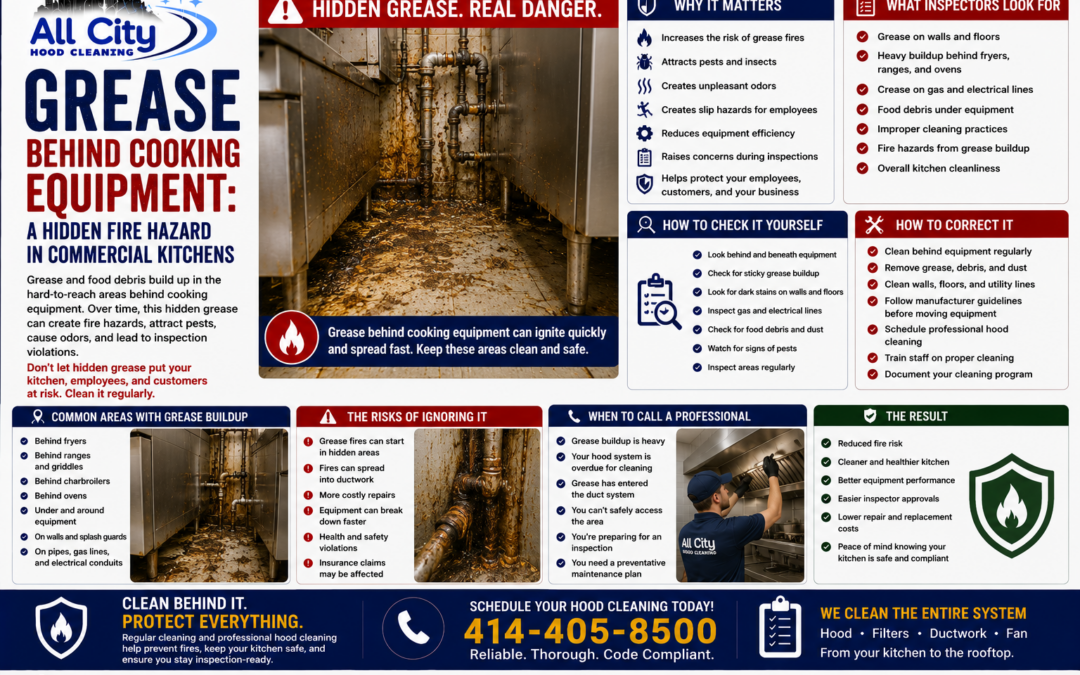
Grease Behind Cooking Equipment: A Hidden Fire Hazard in Commercial Kitchens
When most people think about commercial kitchen cleaning, they picture wiping down countertops, cleaning fryers, or maintaining the kitchen hood. However, one of the most commonly overlooked areas is the space behind cooking equipment. Over time, grease, food debris, and dust can accumulate in these hard-to-reach areas, creating sanitation issues and increasing the risk of fire.
Grease behind cooking equipment is a frequent concern during health, fire, and insurance inspections. Cooking vapors naturally escape around ranges, fryers, griddles, charbroilers, ovens, and other appliances. As these vapors cool, they leave behind sticky grease deposits that collect on walls, floors, utility lines, and equipment surfaces.
Whether you operate a restaurant, school cafeteria, hospital, hotel, nursing home, brewery, casino, church kitchen, food truck, or another commercial cooking facility, keeping these hidden areas clean is an important part of maintaining a safe and efficient kitchen.
Why It Matters
Grease buildup behind equipment is more than a housekeeping issue. It can contribute to fire hazards, attract pests, and make routine maintenance more difficult.
Excess grease can:
- Increase the risk of grease fires.
- Attract insects and rodents.
- Create unpleasant odors.
- Cause slippery working conditions.
- Reduce equipment efficiency.
- Make repairs and maintenance more difficult.
- Raise concerns during health and fire inspections.
Routine cleaning helps reduce these risks while creating a safer workplace for employees.
What Inspectors Look For
Fire inspectors, health inspectors, and insurance representatives often examine areas around cooking equipment for excessive grease accumulation.
They may look for:
- Grease on walls and floors.
- Heavy buildup behind fryers and ranges.
- Grease-coated gas or electrical lines.
- Excess debris beneath equipment.
- Improper cleaning practices.
- Fire hazards caused by accumulated grease.
- Overall kitchen cleanliness and maintenance.
Clean, well-maintained equipment areas demonstrate a commitment to safety and preventative maintenance.
How To Check It Yourself
Kitchen managers should regularly inspect areas behind and beneath cooking equipment.
Look for:
- Sticky grease buildup.
- Dark stains on walls or floors.
- Food debris beneath appliances.
- Grease on utility lines.
- Dust mixed with grease.
- Signs of pests.
- Difficult-to-reach areas that have not been cleaned recently.
Only move heavy commercial equipment if it is designed to be moved safely or if it is disconnected and handled by trained personnel.
How To Correct It
If grease buildup is found:
- Clean behind cooking equipment on a regular schedule.
- Remove accumulated food debris.
- Clean surrounding walls and floors.
- Follow manufacturer recommendations before moving equipment.
- Schedule professional hood cleaning at the appropriate frequency.
- Develop a documented kitchen cleaning program.
- Train staff on proper cleaning procedures.
Routine cleaning helps reduce fire hazards while improving the overall appearance and sanitation of your kitchen.
When To Call A Professional
Contact a professional hood cleaning company if:
- Grease buildup is extensive.
- Your hood system is overdue for cleaning.
- Grease has spread into the exhaust system.
- Employees cannot safely access certain areas.
- You’re preparing for a health, fire, or insurance inspection.
- You need help establishing a preventative maintenance schedule.
Professional hood cleaning complements your daily kitchen cleaning by removing grease from the hood, filters, ductwork, and rooftop exhaust fan while helping reduce grease accumulation throughout the cooking area.
Related Articles
Continue learning about commercial kitchen fire safety:
- Excessive Grease Inside the Hood Canopy
- Grease Buildup Behind Filters
- Grease Accumulation Inside Ducts
- Grease Leaking From Duct Seams
- Missing or Damaged Grease Filters
- Understanding NFPA 96 Hood Cleaning Guidelines
- Top 50 Commercial Kitchen Fire Safety Issues That Can Lead to Inspection Violations
Schedule Service
Grease behind cooking equipment can quietly become a serious fire and sanitation hazard if it is ignored. Regular cleaning, preventative maintenance, and professional hood cleaning help keep your commercial kitchen operating safely and efficiently.
All City Hood Cleaning proudly provides professional commercial kitchen hood cleaning services throughout Wisconsin for restaurants, schools, hospitals, nursing homes, hotels, breweries, casinos, food trucks, churches, manufacturing facilities, and many other commercial kitchens.
Our experienced technicians thoroughly clean your commercial kitchen exhaust system, including the hood, grease filters, ductwork, and rooftop exhaust fan. During every service, we inspect for excessive grease buildup, visible maintenance concerns, and conditions that may affect safety or inspection readiness, helping you protect your investment and maintain a cleaner kitchen.
Contact All City Hood Cleaning today at 414-405-8500 for a free estimate and let us help keep your commercial kitchen clean, safe, compliant, and ready for its next inspection.