
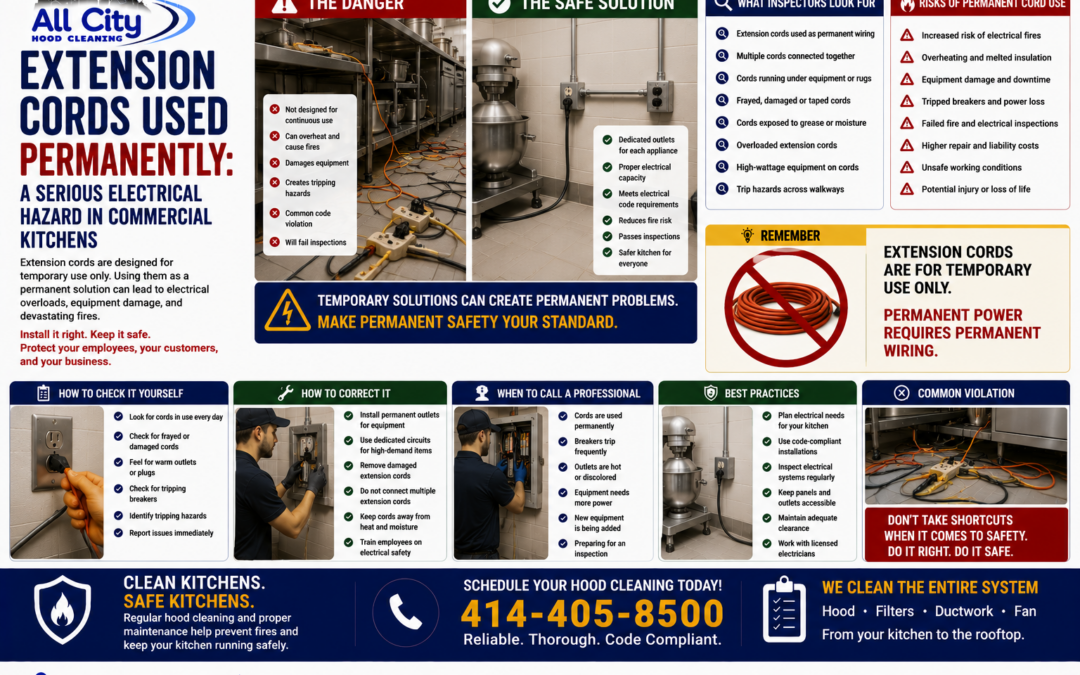
Extension Cords Used Permanently: A Serious Electrical Hazard in Commercial Kitchens
Commercial kitchens rely on dozens of electrical appliances to prepare food safely and efficiently. Mixers, slicers, coffee equipment, warmers, refrigerators, freezers, and other devices all require reliable electrical power. As kitchens expand or equipment is added, it may be tempting to use extension cords as a permanent solution. However, extension cords used permanently can create significant fire and electrical safety hazards.
Extension cords are designed for temporary use only. They are not intended to replace permanent wiring or dedicated electrical outlets. When used continuously in a commercial kitchen, extension cords are exposed to heat, grease, moisture, foot traffic, and frequent movement, all of which increase the risk of damage and electrical failure.
Whether you operate a restaurant, school cafeteria, hospital, hotel, nursing home, brewery, casino, church kitchen, food truck, convenience store, or another commercial cooking facility, using proper electrical connections is an important part of maintaining a safe, code-compliant workplace.
Why It Matters
Commercial kitchen equipment often draws significant electrical power. Extension cords may not be designed to safely carry these electrical loads for extended periods.
Using extension cords permanently can:
- Increase the risk of electrical fires.
- Cause overheating.
- Damage electrical equipment.
- Create tripping hazards.
- Lead to worn or damaged insulation.
- Result in failed fire or electrical inspections.
- Increase repair and maintenance costs.
Installing permanent electrical outlets is typically a much safer long-term solution.
What Inspectors Look For
Fire inspectors and electrical inspectors routinely evaluate commercial kitchens for unsafe electrical practices.
They may look for:
- Extension cords used as permanent wiring.
- Multiple extension cords connected together.
- Extension cords running under equipment.
- Damaged or frayed cords.
- Extension cords exposed to grease or moisture.
- Overloaded extension cords.
- Electrical equipment without dedicated outlets.
- Unsafe routing across walkways.
Improper use of extension cords may result in inspection deficiencies that require correction.
How To Check It Yourself
Kitchen managers should regularly inspect all electrical connections.
Look for:
- Appliances plugged into extension cords every day.
- Cords that remain connected for weeks or months.
- Frayed insulation.
- Pinched or crushed cords.
- Loose electrical connections.
- Cords running through high-traffic areas.
- Heat damage or discoloration.
If an extension cord has become part of the kitchen’s permanent setup, it should be evaluated by a licensed electrician.
How To Correct It
If extension cords are being used permanently:
- Replace temporary cords with permanent electrical outlets.
- Install dedicated circuits for high-powered equipment.
- Remove damaged extension cords immediately.
- Avoid connecting multiple extension cords together.
- Keep cords away from heat, grease, and moisture.
- Train employees on proper electrical safety.
- Include electrical inspections in your preventative maintenance program.
Proper electrical infrastructure improves both safety and equipment reliability.
When To Call A Professional
Contact a licensed electrician if:
- Extension cords are being used daily for permanent equipment.
- New appliances require additional outlets.
- Circuit breakers trip frequently.
- Electrical outlets are overloaded.
- Cords show signs of damage.
- You’re preparing for a fire or insurance inspection.
- You have concerns about your kitchen’s electrical capacity.
A licensed electrician can evaluate your electrical system and recommend permanent solutions that meet applicable electrical and fire safety codes.
Related Articles
Continue learning about commercial kitchen fire safety:
- Overloaded Electrical Outlets
- Combustible Storage Near Appliances
- Poor Housekeeping
- Gas Shutoff Issues
- Manual Shutoffs Blocked
- Employees Unaware of Emergency Procedures
- Missing Class K Fire Extinguisher
- Understanding NFPA 96 Hood Cleaning Guidelines
- Top 50 Commercial Kitchen Fire Safety Issues That Can Lead to Inspection Violations
Schedule Service
Electrical safety and fire prevention go hand in hand. While proper wiring should always be installed by licensed electricians, routine hood cleaning helps reduce grease buildup that can contribute to fire hazards throughout your commercial kitchen.
All City Hood Cleaning proudly provides professional commercial kitchen hood cleaning services throughout Wisconsin for restaurants, schools, hospitals, nursing homes, hotels, breweries, casinos, food trucks, churches, manufacturing facilities, and many other commercial kitchens.
Our experienced technicians thoroughly clean your commercial kitchen exhaust system, including the hood, grease filters, ductwork, and rooftop exhaust fan. During every service, we inspect for visible safety concerns, excessive grease buildup, and maintenance issues that may affect inspection readiness. If we observe unsafe electrical conditions, we’ll recommend that they be evaluated by a qualified electrician.
Contact All City Hood Cleaning today at 414-405-8500 for a free estimate and let us help keep your commercial kitchen exhaust system clean, safe, compliant, and ready for its next inspection.