
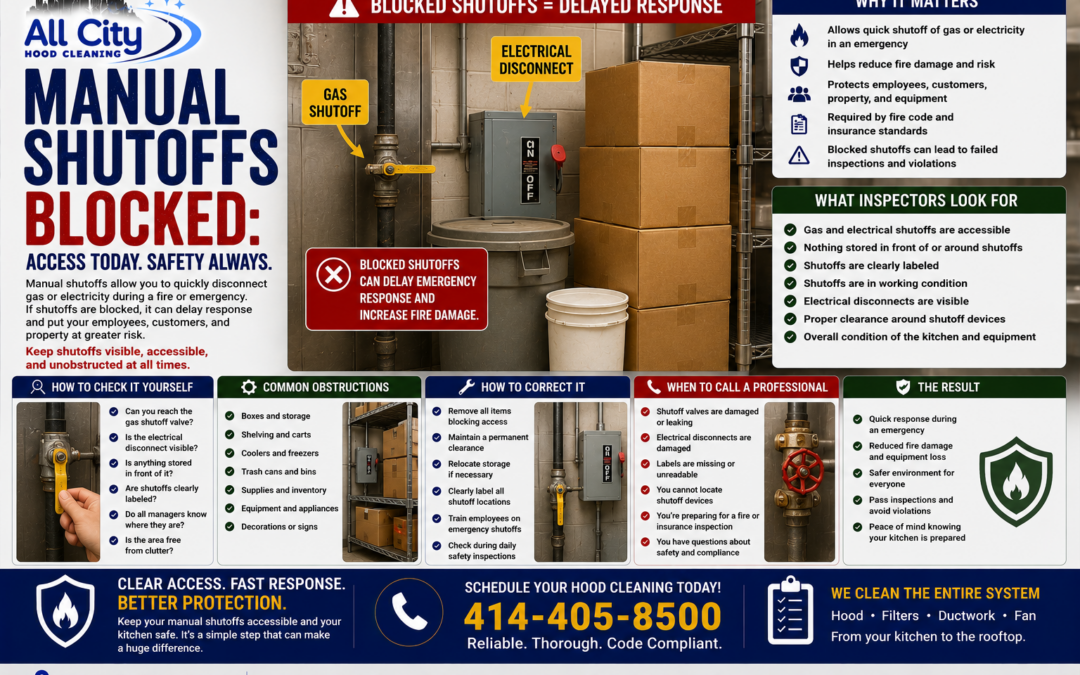
Manual Shutoffs Blocked: Why Emergency Shutoff Access Is Critical in Commercial Kitchens
Commercial kitchens are designed with multiple layers of fire protection, including automatic fire suppression systems, manual pull stations, portable fire extinguishers, and emergency utility shutoffs. One of the most overlooked safety concerns during inspections is manual shutoffs blocked by equipment, storage, or other obstacles.
Emergency gas and electrical shutoffs allow trained personnel or emergency responders to quickly disconnect fuel and power to cooking equipment during a fire or other emergency. If these shutoff valves or switches cannot be reached immediately, valuable time may be lost when every second matters.
Whether you operate a restaurant, school cafeteria, hospital, hotel, nursing home, brewery, casino, church kitchen, food truck, or another commercial cooking facility, keeping manual shutoffs clearly visible and easily accessible is an important part of maintaining a safe and code-compliant kitchen.
Why It Matters
Commercial cooking equipment often operates using natural gas, propane, or electricity. During an emergency, shutting off these utilities can help reduce additional hazards after the fire suppression system has activated.
Blocked manual shutoffs can:
- Delay emergency response.
- Prevent quick shutoff of fuel or electricity.
- Increase the severity of a fire.
- Create safety risks for employees and first responders.
- Result in fire inspection deficiencies.
- Raise concerns during insurance inspections.
- Slow emergency repairs after an incident.
Maintaining clear access to emergency shutoffs helps improve overall kitchen safety and preparedness.
What Inspectors Look For
Fire inspectors routinely verify that emergency utility shutoffs remain accessible.
They may check for:
- Gas shutoff valves blocked by equipment.
- Electrical disconnects hidden behind shelving.
- Boxes or supplies stored in front of shutoff panels.
- Clearly labeled shutoff locations.
- Proper access to emergency disconnect switches.
- Signs that emergency controls are difficult to reach.
- Overall compliance with applicable fire safety requirements.
Any obstruction may require immediate correction before an inspection is considered satisfactory.
How To Check It Yourself
Kitchen managers should include emergency shutoffs in routine safety inspections.
Ask yourself:
- Can the gas shutoff valve be reached immediately?
- Is the electrical disconnect visible?
- Are boxes or equipment blocking access?
- Are emergency shutoffs clearly labeled?
- Does every manager know where they are located?
- Is the surrounding area free from clutter?
Walking through your kitchen from the perspective of an emergency responder can help identify potential access problems before an inspection.
How To Correct It
If emergency shutoffs are blocked:
- Remove anything obstructing access immediately.
- Maintain a permanent clearance around shutoff devices.
- Relocate shelving or storage if necessary.
- Clearly label gas and electrical shutoffs.
- Train employees on emergency shutoff locations.
- Include shutoff inspections in your regular safety checklist.
Simple housekeeping practices can greatly improve emergency readiness.
When To Call A Professional
Contact a qualified contractor if:
- Shutoff valves are damaged or leaking.
- Electrical disconnects appear damaged.
- Labels are missing or unreadable.
- You cannot locate emergency shutoffs.
- You’re preparing for a fire or insurance inspection.
- You have questions about your kitchen’s emergency utility controls.
While your hood cleaning contractor may identify visible concerns, repairs to gas or electrical shutoffs should always be performed by qualified professionals.
Related Articles
Continue learning about commercial kitchen fire safety:
- Damaged Pull Station
- Pull Station Obstructed
- Missing Fusible Links
- Blocked Nozzles
- Missing Nozzle Caps
- Expired Inspection Tags
- Understanding NFPA 96 Hood Cleaning Guidelines
- Top 50 Commercial Kitchen Fire Safety Issues That Can Lead to Inspection Violations
Schedule Service
A safe commercial kitchen depends on more than clean exhaust systems. Keeping emergency shutoffs accessible helps employees and emergency responders react quickly if a fire or equipment emergency occurs.
All City Hood Cleaning proudly provides professional commercial kitchen hood cleaning services throughout Wisconsin for restaurants, schools, hospitals, nursing homes, hotels, breweries, casinos, food trucks, churches, manufacturing facilities, and many other commercial kitchens.
During every hood cleaning service, our experienced technicians inspect the visible condition of your kitchen exhaust system and notify you if we observe blocked emergency shutoffs, obstructed fire safety equipment, excessive grease buildup, or other visible conditions that could affect inspection readiness. We recommend that gas, electrical, and fire suppression equipment always be serviced by qualified professionals.
Contact All City Hood Cleaning today at 414-405-8500 for a free estimate and let us help keep your commercial kitchen clean, compliant, and prepared for its next fire safety inspection.