
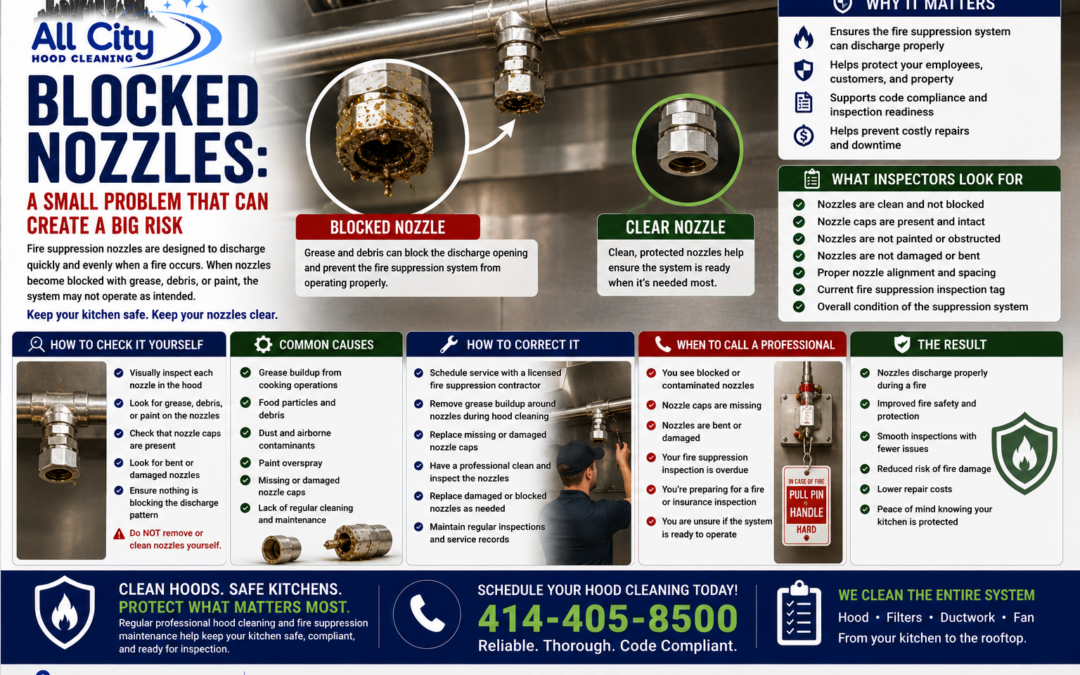
Blocked Nozzles: Why Clear Fire Suppression Nozzles Are Critical for Commercial Kitchen Safety
Your commercial kitchen fire suppression system is designed to respond within seconds if a cooking fire occurs. Installed inside the kitchen hood, the system protects cooking appliances by releasing a fire suppression agent through specially designed discharge nozzles. For the system to work as intended, every nozzle must remain clean, unobstructed, and ready to operate.
Blocked nozzles are a common inspection concern in commercial kitchens. Grease buildup, dust, food residue, paint overspray, or other contaminants can partially or completely obstruct the discharge opening. Even a small blockage may interfere with the proper distribution of the fire suppression agent during an emergency.
Whether you operate a restaurant, school cafeteria, hospital, hotel, nursing home, brewery, casino, church kitchen, food truck, or another commercial cooking facility, routine inspections and professional maintenance help ensure your fire suppression system remains ready when it’s needed most.
Why It Matters
Fire suppression nozzles are carefully positioned to protect cooking equipment, grease-producing appliances, and portions of the exhaust system. Because they are located directly above cooking operations, they are continually exposed to grease, smoke, heat, and airborne particles.
Blocked nozzles can:
- Prevent proper discharge of the fire suppression agent.
- Allow grease or debris to collect inside the nozzle.
- Reduce confidence that the system is ready to operate.
- Raise concerns during fire inspections.
- Increase maintenance requirements.
- Indicate that routine cleaning or service has been neglected.
Keeping nozzles clean helps ensure the fire suppression system can perform as designed.
What Inspectors Look For
During fire safety inspections, inspectors and licensed fire suppression technicians carefully examine the condition of every discharge nozzle.
They may look for:
- Grease buildup on nozzle openings.
- Missing or damaged nozzle caps.
- Paint covering the discharge opening.
- Food debris or dust inside the nozzle.
- Bent or damaged nozzles.
- Proper nozzle alignment.
- Current fire suppression inspection tags.
Visible obstructions often require correction before the system can be considered inspection-ready.
How To Check It Yourself
Kitchen managers should include a visual inspection of the suppression nozzles during routine walkthroughs.
Look for:
- Grease covering the nozzle cap.
- Missing nozzle caps.
- Visible debris around the nozzle opening.
- Painted or damaged nozzles.
- Bent discharge nozzles.
- Loose mounting hardware.
Do not insert objects into the nozzle or attempt to clean the inside of the discharge opening yourself. Fire suppression systems should only be serviced by qualified fire protection professionals.
How To Correct It
If blocked nozzles are suspected:
- Schedule an inspection by a licensed fire suppression contractor.
- Replace missing nozzle caps if needed.
- Remove grease buildup from around the nozzles during professional hood cleaning.
- Replace damaged nozzles when necessary.
- Maintain current fire suppression inspections.
- Follow a regular hood cleaning schedule to minimize grease accumulation.
Keeping the hood system clean helps reduce grease buildup around fire suppression components.
When To Call A Professional
You should contact a qualified fire suppression contractor if:
- Nozzles appear blocked or contaminated.
- Grease has entered the nozzle opening.
- A nozzle cap is missing.
- Nozzles appear bent or damaged.
- Your fire suppression inspection is overdue.
- You’re preparing for a fire or insurance inspection.
- You’re unsure whether the system is ready for operation.
A licensed fire suppression technician can inspect, clean, and service the nozzles while ensuring the system complies with applicable fire safety requirements.
Related Articles
Continue learning about commercial kitchen fire safety:
- Missing Nozzle Caps
- Expired Inspection Tags
- Excessive Grease Inside the Hood Canopy
- Missing or Damaged Grease Filters
- Grease Accumulation Inside Ducts
- Understanding NFPA 96 Hood Cleaning Guidelines
- Commercial Kitchen Fire Suppression System Inspections
- Top 50 Commercial Kitchen Fire Safety Issues That Can Lead to Inspection Violations
Schedule Service
Clean fire suppression nozzles are an important part of a safe commercial kitchen. While your fire suppression system should always be serviced by a licensed contractor, regular professional hood cleaning helps reduce grease buildup around the nozzles and supports a cleaner, safer exhaust system.
All City Hood Cleaning proudly provides professional commercial kitchen hood cleaning services throughout Wisconsin for restaurants, schools, hospitals, nursing homes, hotels, breweries, casinos, food trucks, churches, manufacturing facilities, and many other commercial kitchens.
Our experienced technicians carefully clean your commercial kitchen exhaust system while protecting fire suppression equipment. If we observe blocked nozzles, missing nozzle caps, or other visible concerns, we’ll recommend that you have the system inspected by a qualified fire suppression professional.
Contact All City Hood Cleaning today at 414-405-8500 for a free estimate and let us help keep your commercial kitchen exhaust system clean, safe, and inspection-ready.