
Expired Inspection Tags: Why Keeping Your Hood Cleaning Certification Current Matters
Commercial kitchen exhaust systems require routine maintenance to help remove grease buildup and keep the system operating safely. One of the easiest ways for fire inspectors, insurance representatives, and facility managers to verify that maintenance has been performed is by checking the inspection tag located on the kitchen hood or exhaust system.
An expired inspection tag does not automatically mean your kitchen is unsafe, but it may indicate that your scheduled hood cleaning or inspection is overdue. Missing or outdated service records can also make it difficult to demonstrate that your commercial kitchen exhaust system is being maintained according to an appropriate cleaning schedule.
Whether you operate a restaurant, school cafeteria, hospital, nursing home, hotel, brewery, casino, church kitchen, food truck, or another commercial cooking facility, keeping your inspection tags current is an important part of maintaining an organized and inspection-ready kitchen.
Why It Matters
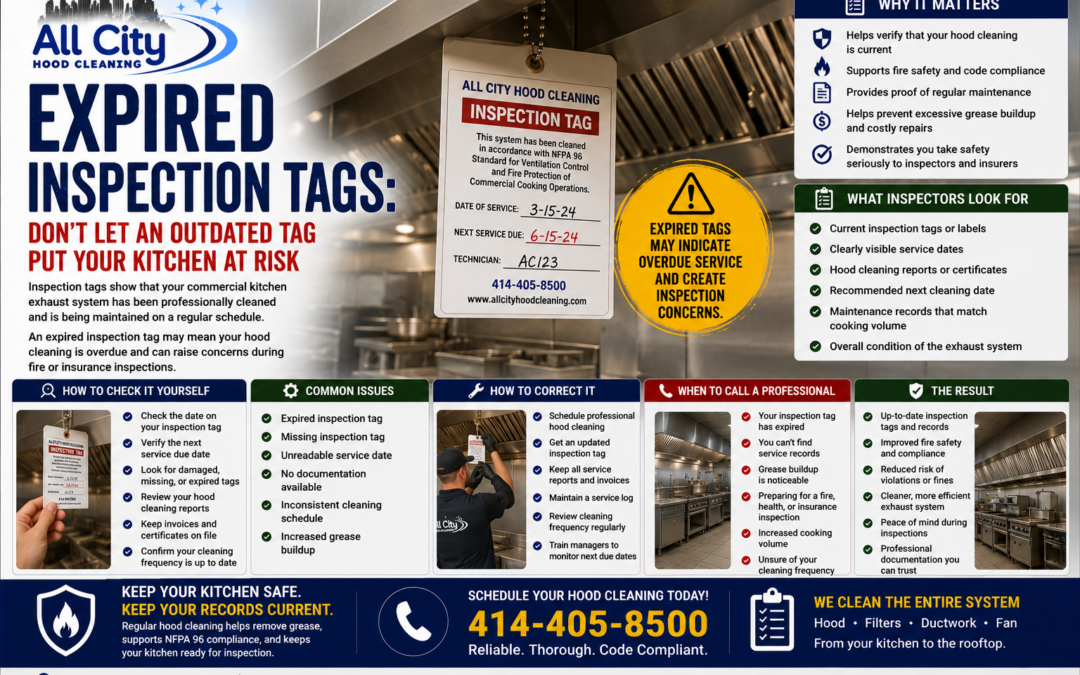
Professional hood cleaning companies typically place an inspection or service tag on the exhaust system after completing service. The tag often includes the service date, the company performing the work, and the recommended date for the next cleaning.
An expired inspection tag may:
- Suggest that hood cleaning is overdue.
- Raise questions during fire inspections.
- Make it difficult to verify maintenance history.
- Increase the likelihood of excessive grease buildup.
- Create concerns for insurance inspections.
- Indicate that the cleaning schedule should be reviewed.
Keeping inspection tags current provides a quick reference for kitchen managers and inspectors while helping ensure routine maintenance is not overlooked.
What Inspectors Look For
During a fire inspection, inspectors often review maintenance documentation in addition to examining the exhaust system.
They may check for:
- Current hood cleaning inspection tags.
- Clearly visible service labels.
- Hood cleaning certificates or reports.
- Dates of previous service.
- Evidence that the cleaning schedule matches the cooking volume.
- Grease buildup that appears inconsistent with the service date.
Having organized maintenance records demonstrates that your facility takes preventative maintenance seriously.
How To Check It Yourself
Kitchen managers should periodically review their hood cleaning documentation.
Check for:
- The date shown on the inspection tag.
- The recommended next cleaning date.
- Missing or damaged service tags.
- Service reports from previous cleanings.
- Hood cleaning invoices for your records.
- Documentation stored in an accessible location.
If the inspection tag is missing or outdated, verify whether professional service has already been completed or if scheduling is needed.
How To Correct It
If your inspection tag has expired:
- Schedule professional hood cleaning if service is overdue.
- Keep copies of all hood cleaning reports.
- Replace damaged or unreadable inspection tags.
- Maintain a service log for future reference.
- Review your cleaning frequency based on cooking volume.
- Train managers to monitor inspection dates regularly.
A consistent maintenance schedule helps keep your commercial kitchen prepared for inspections throughout the year.
When To Call A Professional
Contact a professional hood cleaning company if:
- Your inspection tag has expired.
- You cannot locate previous service records.
- Grease buildup is becoming noticeable.
- You’re preparing for a fire, health, or insurance inspection.
- Your kitchen has increased cooking volume.
- You are unsure how often your exhaust system should be cleaned.
A qualified hood cleaning contractor can inspect your exhaust system, perform professional cleaning when needed, and provide updated inspection tags and documentation for your records.
Related Articles
Continue learning about commercial kitchen fire safety:
- Understanding NFPA 96 Hood Cleaning Guidelines
- Excessive Grease Inside the Hood Canopy
- Grease Accumulation Inside Ducts
- Excessive Grease on the Exhaust Fan
- Grease Containment Overflowing
- Water Intrusion
- Commercial Kitchen Exhaust Corrosion
- Top 50 Commercial Kitchen Fire Safety Issues That Can Lead to Inspection Violations
Schedule Service
Keeping your inspection tags current is one of the simplest ways to demonstrate that your commercial kitchen exhaust system is receiving regular professional maintenance. Routine hood cleaning helps reduce grease buildup, improve ventilation performance, and prepare your kitchen for inspections.
All City Hood Cleaning proudly provides professional commercial kitchen hood cleaning services throughout Wisconsin for restaurants, schools, hospitals, nursing homes, hotels, breweries, casinos, food trucks, churches, manufacturing facilities, and many other commercial kitchens.
Our experienced technicians thoroughly clean the complete exhaust system, including the hood, filters, ductwork, and rooftop exhaust fan. After every service, we provide documentation and updated inspection tags to help you maintain accurate maintenance records and stay inspection-ready.
Contact All City Hood Cleaning today at 414-405-8500 for a free estimate and let us help keep your commercial kitchen exhaust system clean, compliant, and ready for its next inspection.