
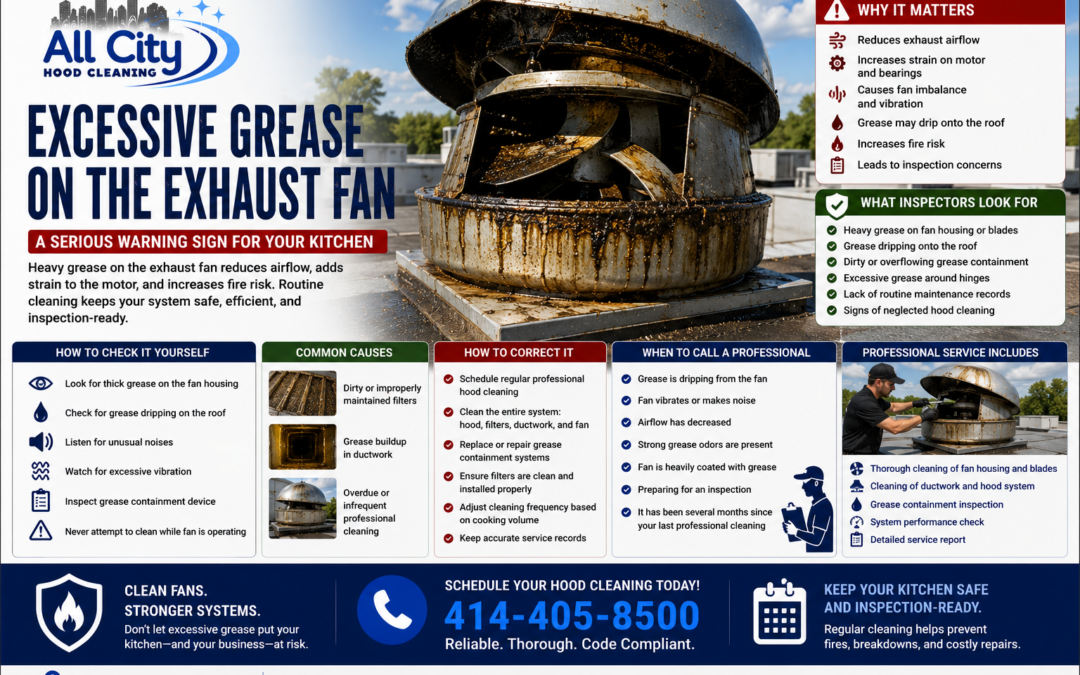
Excessive Grease on the Exhaust Fan: A Serious Warning Sign for Commercial Kitchen Safety
Your rooftop exhaust fan is one of the hardest-working components of your commercial kitchen exhaust system. Every time your kitchen is in operation, the fan pulls heat, smoke, steam, and grease-laden vapors through the hood, filters, and ductwork before exhausting them safely outside.
Although a small amount of grease is expected during normal operation, excessive grease on the exhaust fan is a sign that your exhaust system may require professional attention. Heavy grease buildup can reduce airflow, place additional strain on the fan motor, and increase the amount of combustible material inside the exhaust system.
Whether you operate a restaurant, school cafeteria, hospital, nursing home, hotel, brewery, casino, church kitchen, food truck, or another commercial cooking facility, keeping the rooftop exhaust fan clean is an important part of maintaining a safe, efficient, and code-compliant kitchen.
Why It Matters
The rooftop exhaust fan is the final stop in your kitchen exhaust system. As grease-laden air travels through the ductwork, small grease particles eventually reach the fan housing and blades.
If professional hood cleaning is delayed or cooking volume increases, grease can accumulate rapidly on the fan.
Excessive grease on the exhaust fan can:
- Reduce exhaust airflow.
- Increase strain on the motor and bearings.
- Cause fan imbalance and vibration.
- Shorten the life of mechanical components.
- Allow grease to drip onto the roof.
- Increase fire risks associated with grease buildup.
- Lead to inspection concerns.
Routine cleaning helps keep the exhaust fan operating efficiently while reducing unnecessary wear.
What Inspectors Look For
During fire safety inspections, inspectors often examine the rooftop exhaust fan as part of the complete kitchen exhaust system.
They may look for:
- Heavy grease accumulation on the fan housing.
- Grease buildup on fan blades.
- Grease dripping onto the roof.
- Excessive grease around the fan hinge.
- Dirty fan containment systems.
- Evidence that routine hood cleaning has been neglected.
- Maintenance records documenting professional service.
A clean rooftop exhaust fan demonstrates that the entire exhaust system is being maintained on a regular schedule.
How To Check It Yourself
Kitchen managers should periodically perform a visual inspection of the rooftop exhaust fan if it can be accessed safely.
Look for:
- Thick grease deposits on the fan housing.
- Grease dripping onto the roof membrane.
- Dirty fan blades.
- Excessive vibration during operation.
- Unusual noises coming from the fan.
- Grease leaking around hinges or access points.
- Overflowing grease containment devices.
Never attempt to disassemble or clean a rooftop exhaust fan while it is operating.
How To Correct It
The best way to prevent excessive grease buildup is through routine preventative maintenance.
Recommended practices include:
- Schedule regular professional hood cleaning.
- Clean the hood, filters, ductwork, and exhaust fan as a complete system.
- Replace damaged grease containment systems when necessary.
- Keep grease filters clean and properly installed.
- Monitor cooking volume and adjust cleaning frequency if needed.
- Maintain accurate hood cleaning service records.
A complete cleaning should include every component of the exhaust system, from the hood canopy to the rooftop fan.
When To Call A Professional
You should contact a professional hood cleaning company if:
- Grease is dripping from the rooftop exhaust fan.
- The fan vibrates excessively.
- Airflow has noticeably decreased.
- Strong grease odors are present.
- The fan appears heavily coated with grease.
- You’re preparing for a fire or insurance inspection.
- It has been several months since your last professional hood cleaning.
A qualified technician can inspect and clean the entire exhaust system while identifying maintenance concerns before they become more expensive repairs.
Related Articles
Continue learning about commercial kitchen exhaust system maintenance:
- Grease Accumulation Inside Ducts
- Grease Leaking From Duct Seams
- Grease on Exterior Duct Surfaces
- Unusual Odors or Smoke
- Loose Fasteners
- Commercial Kitchen Exhaust Corrosion
- Damaged Duct Insulation
- Understanding NFPA 96 Hood Cleaning Guidelines
- Top 50 Commercial Kitchen Fire Safety Issues That Can Lead to Inspection Violations
Schedule Service
Your rooftop exhaust fan is a critical part of your commercial kitchen ventilation system. Allowing grease to build up on the fan can reduce performance, increase maintenance costs, and create unnecessary fire risks.
All City Hood Cleaning proudly provides professional commercial kitchen hood cleaning services throughout Wisconsin for restaurants, schools, hospitals, nursing homes, hotels, breweries, casinos, food trucks, churches, manufacturing facilities, and many other commercial kitchens.
Our experienced technicians thoroughly clean the entire kitchen exhaust system, including the hood, grease filters, ductwork, and rooftop exhaust fan, helping keep your kitchen safe, efficient, and ready for its next inspection.
Contact All City Hood Cleaning today at 414-405-8500 for a free estimate and let us help keep your commercial kitchen exhaust system operating at peak performance.