
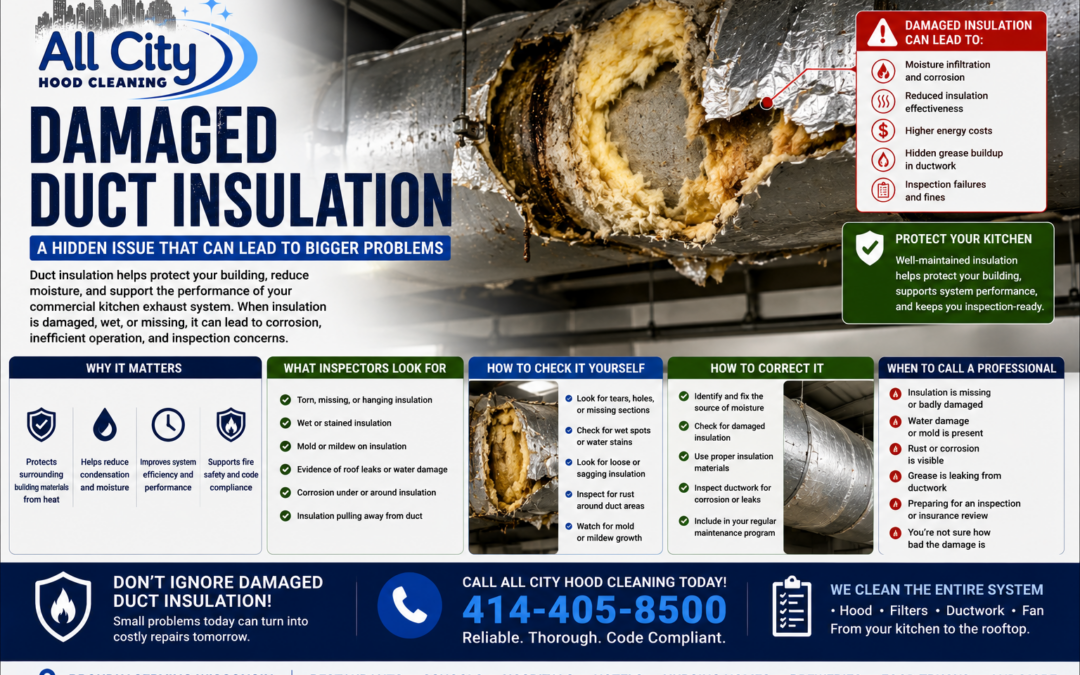
Damaged Duct Insulation: Why It Matters for Commercial Kitchen Exhaust Systems
A commercial kitchen exhaust system is much more than the hood located above the cooking equipment. Behind the scenes, a network of ductwork carries heat, smoke, grease-laden vapors, and cooking byproducts safely out of the building. In many installations, portions of this ductwork are covered with insulation that helps protect surrounding building materials and supports the overall performance of the exhaust system.
Over time, however, duct insulation can become damaged due to moisture, age, accidental impacts, roof leaks, maintenance work, or general wear and tear. While insulation may not receive much attention during day-to-day kitchen operations, damaged duct insulation can be an indication that the exhaust system should be inspected more closely.
Routine inspections and professional hood cleaning provide opportunities to identify damaged insulation before it leads to larger maintenance concerns.
Why It Matters
Commercial kitchen exhaust duct insulation serves several important purposes. Depending on the design of the exhaust system, insulation may help protect surrounding building components from heat, reduce condensation, and improve the durability of the duct system.
When insulation becomes damaged, torn, wet, or missing, it may:
- Expose sections of the ductwork.
- Allow moisture to collect around the duct.
- Contribute to corrosion over time.
- Reduce the effectiveness of the insulation system.
- Make future maintenance more difficult.
- Raise questions during inspections if damage is extensive.
Although damaged insulation does not always indicate a fire hazard by itself, it often suggests that the exhaust system should be evaluated for additional maintenance needs.
What Inspectors Look For
During commercial kitchen inspections, inspectors often observe the visible condition of the exhaust system, especially where ductwork is exposed.
They may look for:
- Torn or missing insulation.
- Wet or stained insulation.
- Insulation pulling away from the ductwork.
- Signs of roof leaks near rooftop ductwork.
- Damage caused by previous repairs.
- Corrosion or rust beneath damaged insulation.
Visible damage may prompt a closer examination of the overall condition of the exhaust system.
How To Check It Yourself
Kitchen managers and facility maintenance staff can perform simple visual inspections of exposed ductwork.
Look for:
- Tears or holes in insulation.
- Wet spots or water stains.
- Loose insulation wrapping.
- Missing insulation sections.
- Mold or mildew on insulation surfaces.
- Evidence of pests or nesting materials.
- Rust visible around insulated areas.
If damage is discovered, document the location and monitor it until it can be evaluated by a qualified professional.
How To Correct It
If duct insulation has been damaged:
- Avoid covering the damage with tape or temporary materials unless recommended by a qualified contractor.
- Identify and correct the source of any moisture.
- Replace damaged insulation using appropriate materials.
- Inspect nearby ductwork for corrosion or grease leaks.
- Include insulation in routine maintenance inspections.
- Continue following your professional hood cleaning schedule.
Proper repairs help maintain the condition and performance of the entire exhaust system.
When To Call A Professional
You should contact a professional hood cleaning or commercial exhaust system contractor if:
- Insulation is missing or badly damaged.
- Water has soaked the insulation.
- Rust or corrosion is visible beneath the insulation.
- Grease is leaking through insulated ductwork.
- You’re preparing for a fire or insurance inspection.
- You are unsure whether the insulation affects the safe operation of your exhaust system.
A professional can inspect the ductwork, identify the cause of the damage, and recommend appropriate repairs or maintenance.
Related Articles
Continue learning about commercial kitchen fire safety:
- Grease Accumulation Inside Ducts
- Grease Leaking From Duct Seams
- Missing Duct Access Panels
- Access Doors Painted Shut
- Corrosion or Damaged Hood Components
- Missing Access Panels
- Understanding NFPA 96 Hood Cleaning Guidelines
- Top 50 Commercial Kitchen Fire Safety Issues That Can Lead to Inspection Violations
Schedule Service
Routine inspections help identify maintenance concerns before they become costly repairs. If you’ve noticed damaged duct insulation, grease leaks, or signs of wear within your commercial kitchen exhaust system, professional service can help determine the best course of action.
All City Hood Cleaning proudly provides professional commercial kitchen hood cleaning services throughout Wisconsin for restaurants, schools, hospitals, nursing homes, hotels, breweries, food trucks, casinos, churches, manufacturing facilities, and many other commercial kitchens.
Our experienced technicians inspect and clean the complete kitchen exhaust system, helping identify maintenance concerns that could affect performance, safety, and inspection readiness.
Contact All City Hood Cleaning today at 414-405-8500 for a free estimate and let us help keep your commercial kitchen exhaust system clean, well maintained, and operating safely.