
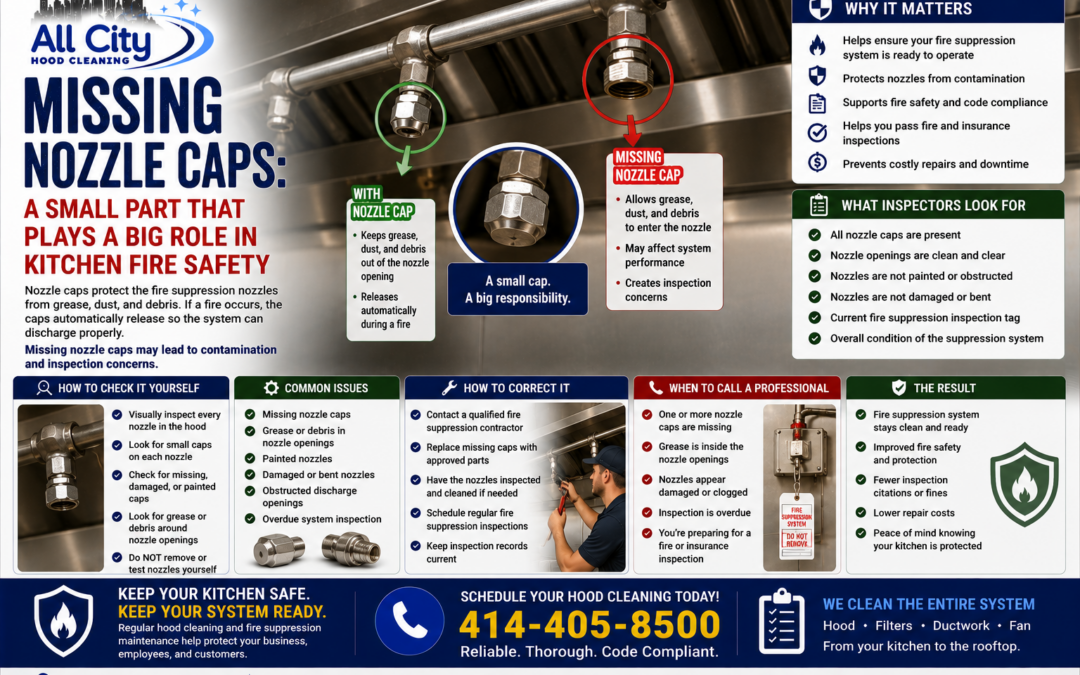
Missing Nozzle Caps: Why They Matter in Commercial Kitchen Fire Suppression Systems
A commercial kitchen fire suppression system is one of the most important safety features protecting your kitchen, employees, customers, and building. Installed inside the kitchen hood, the system is designed to automatically discharge a fire-suppressing agent over cooking equipment if a fire occurs. While most operators notice the larger system components, one small item is often overlooked: the nozzle caps.
Missing nozzle caps may seem like a minor issue, but they serve an important purpose. These small protective caps cover the discharge nozzles and help prevent grease, dust, insects, and debris from entering the openings. During a fire, the caps are designed to release automatically when the suppression system activates, allowing the extinguishing agent to discharge properly.
If nozzle caps are missing, contaminants can enter the nozzles over time, potentially affecting the performance of the fire suppression system. Routine inspections and professional maintenance help ensure these components remain in proper working condition.
Why It Matters
Fire suppression nozzles are positioned throughout the hood to protect cooking appliances, duct openings, and grease-producing equipment. Because they are located directly above cooking surfaces, they are constantly exposed to grease, smoke, heat, and airborne particles.
Missing nozzle caps can:
- Allow grease to enter the nozzle openings.
- Permit dust and debris to collect inside the nozzles.
- Increase maintenance requirements.
- Raise concerns during fire inspections.
- Indicate the fire suppression system needs servicing.
- Reduce confidence that the system is fully protected.
Although the caps are small, they play an important role in keeping the suppression system clean and ready for operation.
What Inspectors Look For
Fire inspectors and suppression system technicians routinely examine the condition of the entire fire suppression system.
They may check for:
- Missing nozzle caps.
- Grease buildup on suppression nozzles.
- Damaged or bent nozzles.
- Painted-over nozzles.
- Obstructed discharge openings.
- Current fire suppression inspection tags.
- Overall condition of the suppression system.
Visible missing caps often prompt a closer inspection of the entire fire suppression system.
How To Check It Yourself
Kitchen managers should visually inspect suppression nozzles during routine kitchen walkthroughs.
Look for:
- Small protective caps installed on every nozzle.
- Grease buildup around nozzle openings.
- Missing or damaged caps.
- Bent or loose nozzles.
- Painted nozzles.
- Obstructions that could interfere with discharge.
Never remove, test, or adjust fire suppression nozzles yourself. Only qualified fire protection professionals should service the suppression system.
How To Correct It
If nozzle caps are missing:
- Contact your fire suppression system service provider.
- Replace missing caps with manufacturer-approved parts.
- Have the nozzles inspected for contamination.
- Schedule routine fire suppression inspections.
- Continue regular professional hood cleaning to reduce grease accumulation around the nozzles.
- Keep inspection records current.
Prompt replacement helps keep the fire suppression system in proper operating condition.
When To Call A Professional
You should contact a qualified fire suppression system contractor if:
- One or more nozzle caps are missing.
- Grease has entered the nozzle openings.
- Nozzles appear damaged or clogged.
- You’re preparing for a fire or insurance inspection.
- Your fire suppression inspection is overdue.
- You are unsure whether all components are properly installed.
Your hood cleaning company and fire suppression contractor can work together to ensure your kitchen exhaust system and fire protection equipment remain clean, compliant, and ready for inspection.