
Missing Fusible Links: A Critical Fire Suppression System Inspection Issue
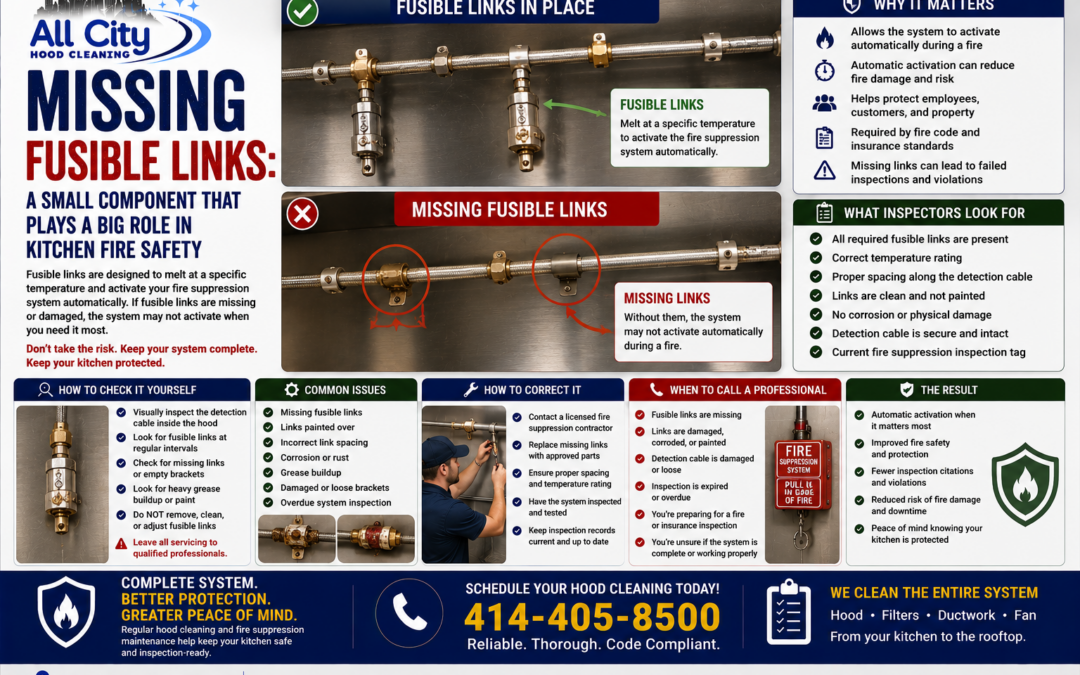
Your commercial kitchen fire suppression system is designed to protect your employees, customers, equipment, and building if a cooking fire occurs. One of the key components that allows many fire suppression systems to activate automatically is the fusible link.
Although small and easy to overlook, fusible links play a critical role in fire protection. They are designed to melt at a specific temperature, triggering the automatic release of the fire suppression system before a fire has the opportunity to spread.
If fusible links are missing, damaged, painted, or installed incorrectly, the automatic activation system may not operate as intended. While manual pull stations provide a backup method of activating the system, automatic protection is an important layer of commercial kitchen fire safety.
Whether you operate a restaurant, school cafeteria, hospital, hotel, nursing home, brewery, casino, church kitchen, food truck, or another commercial cooking facility, ensuring fusible links are present and properly maintained is essential for inspection readiness and overall fire protection.
Why It Matters
Fusible links are temperature-sensitive devices installed along the fire suppression detection cable inside the hood and ductwork. When excessive heat from a fire reaches the rated temperature of the link, it separates and activates the fire suppression system.
Missing fusible links can:
- Prevent automatic fire suppression activation.
- Increase fire damage if a fire occurs.
- Delay emergency response.
- Raise concerns during fire inspections.
- Result in failed fire suppression inspections.
- Increase liability and insurance concerns.
- Place employees and customers at greater risk.
Although manual pull stations provide another method of activation, automatic operation is a critical part of the system’s overall protection.
What Inspectors Look For
Licensed fire suppression technicians and fire inspectors routinely inspect detection components during scheduled system inspections.
They may check for:
- Missing fusible links.
- Correct link spacing.
- Proper temperature ratings.
- Grease buildup on detection cables.
- Damaged or corroded links.
- Painted or contaminated fusible links.
- Current fire suppression inspection tags.
Any missing or damaged fusible links typically require immediate correction by a licensed fire suppression contractor.
How To Check It Yourself
Kitchen managers can perform a simple visual inspection without touching the system.
Look for:
- Detection cables running through the hood.
- Fusible links securely attached to the cable.
- Heavy grease buildup around the links.
- Obvious corrosion or physical damage.
- Missing sections of the detection system.
- Inspection tags showing current service.
Do not remove, clean, adjust, or replace fusible links yourself. They are part of a certified fire suppression system and should only be serviced by licensed professionals.
How To Correct It
If fusible links are missing or appear damaged:
- Contact your licensed fire suppression contractor immediately.
- Replace fusible links with manufacturer-approved components.
- Schedule a complete fire suppression inspection.
- Continue routine professional hood cleaning to reduce grease buildup around the detection system.
- Maintain inspection records and service documentation.
- Train employees to report damaged fire protection equipment.
Proper maintenance helps ensure the automatic fire suppression system remains ready to operate if needed.
When To Call A Professional
Contact a qualified fire suppression contractor if:
- Fusible links are missing.
- Detection cables appear damaged.
- Links are heavily coated with grease.
- Corrosion is visible.
- The fire suppression inspection has expired.
- You’re preparing for a fire or insurance inspection.
- You’re unsure whether your automatic detection system is complete.
A licensed fire suppression technician can inspect the system, replace damaged components, and verify that it operates according to the manufacturer’s specifications and applicable fire safety codes.
Related Articles
Continue learning about commercial kitchen fire safety:
- Damaged Pull Station
- Pull Station Obstructed
- Blocked Nozzles
- Missing Nozzle Caps
- Expired Inspection Tags
- Excessive Grease Inside the Hood Canopy
- Understanding NFPA 96 Hood Cleaning Guidelines
- Commercial Kitchen Fire Suppression System Inspections
- Top 50 Commercial Kitchen Fire Safety Issues That Can Lead to Inspection Violations
Schedule Service
Automatic fire suppression systems rely on properly functioning detection components to help protect your commercial kitchen. While fire suppression systems should always be inspected by licensed fire protection professionals, regular hood cleaning helps reduce grease buildup that can affect the visibility and condition of these critical components.
All City Hood Cleaning proudly provides professional commercial kitchen hood cleaning services throughout Wisconsin for restaurants, schools, hospitals, nursing homes, hotels, breweries, casinos, food trucks, churches, manufacturing facilities, and many other commercial kitchens.
During every hood cleaning, our experienced technicians inspect the visible condition of your kitchen exhaust system. If we notice missing fusible links, damaged detection components, excessive grease buildup, or other visible fire safety concerns, we’ll recommend that you have your fire suppression system inspected by a qualified fire protection contractor.
Contact All City Hood Cleaning today at 414-405-8500 for a free estimate and let us help keep your commercial kitchen exhaust system clean, safe, compliant, and ready for its next inspection.