
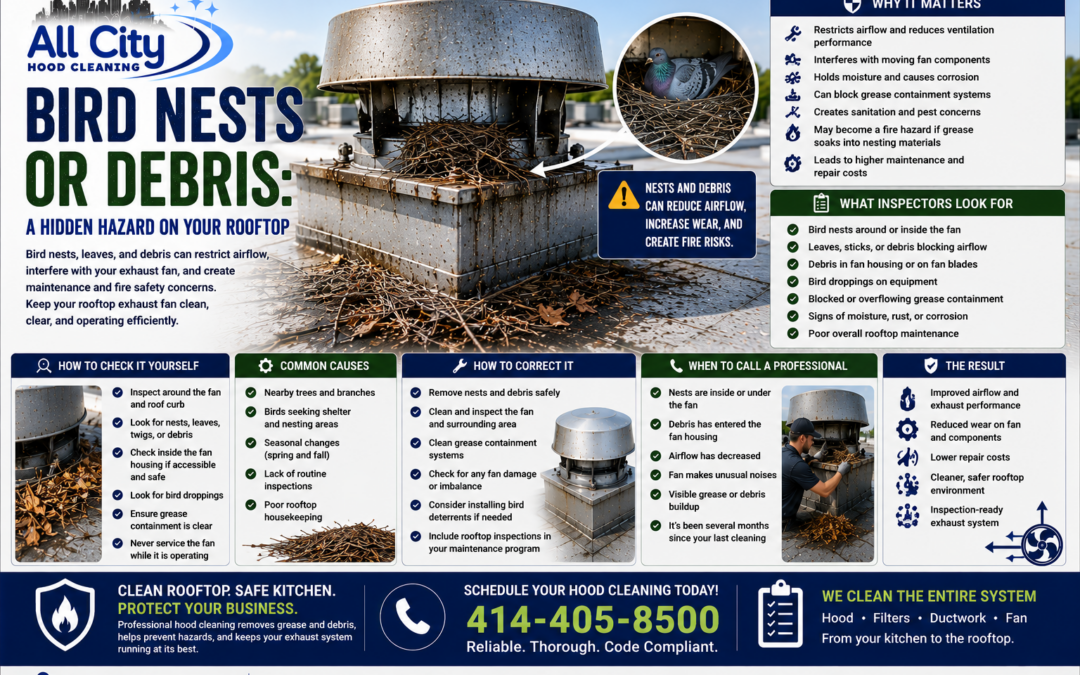
Bird Nests or Debris in Commercial Kitchen Exhaust Fans: A Hidden Hazard on Your Roof
Your commercial kitchen exhaust system is designed to safely remove heat, smoke, grease-laden vapors, and cooking odors from your building. While most kitchen managers focus on keeping the hood, filters, and ductwork clean, the rooftop exhaust fan is exposed to the elements every day. Over time, birds, leaves, sticks, and other debris can accumulate around the fan and affect its performance.
Bird nests or debris may seem harmless at first, but they can restrict airflow, interfere with moving components, retain moisture, and make routine maintenance more difficult. In some cases, nesting materials can become saturated with grease, creating an additional fire concern.
Whether you operate a restaurant, school cafeteria, hospital, hotel, nursing home, brewery, casino, church kitchen, food truck, or another commercial cooking facility, regular inspections of your rooftop exhaust fan help ensure it remains clean, unobstructed, and operating efficiently.
Why It Matters
Commercial rooftop exhaust fans operate year-round and are often attractive nesting locations because they provide warmth, shelter, and protection from predators.
When birds or debris accumulate around the fan, they can:
- Restrict airflow.
- Reduce ventilation performance.
- Interfere with moving fan components.
- Hold moisture against metal surfaces, increasing corrosion.
- Block grease containment systems.
- Increase maintenance costs.
- Create sanitation concerns.
Removing debris early helps maintain proper airflow while protecting the exhaust system from unnecessary wear.
What Inspectors Look For
During rooftop inspections, fire inspectors and maintenance technicians often evaluate the condition of the exhaust fan and surrounding roof area.
They may observe:
- Bird nests around the exhaust fan.
- Leaves or branches blocking airflow.
- Debris inside the fan housing.
- Blocked grease containment systems.
- Signs of bird droppings.
- Corrosion caused by trapped moisture.
- Poor rooftop housekeeping.
A clean rooftop fan area demonstrates that routine maintenance is being performed.
How To Check It Yourself
If rooftop access is safe and permitted, periodically inspect the area surrounding the exhaust fan.
Look for:
- Bird nests near the fan.
- Leaves collecting around the roof curb.
- Twigs or nesting materials.
- Debris inside the fan housing.
- Bird droppings on or around the equipment.
- Blocked grease containment trays.
- Restricted airflow around the fan.
Always follow your facility’s rooftop safety procedures and never reach into or service a fan while it is operating.
How To Correct It
If bird nests or debris are found:
- Remove debris safely when appropriate.
- Schedule professional hood cleaning if grease contamination is present.
- Inspect the fan for damage caused by nesting materials.
- Clean grease containment systems.
- Trim nearby tree branches if they contribute to debris buildup.
- Consider installing approved bird deterrents where appropriate.
- Include rooftop inspections in your preventative maintenance program.
Routine maintenance helps prevent recurring debris buildup and improves the long-term performance of your exhaust system.
When To Call A Professional
You should contact a professional hood cleaning or exhaust system contractor if:
- Bird nests are located inside or beneath the exhaust fan.
- Debris has entered the fan housing.
- Airflow has noticeably decreased.
- The fan is making unusual noises.
- Grease buildup is visible around the fan.
- You’re preparing for a fire or insurance inspection.
- It has been several months since your last professional hood cleaning.
A qualified technician can safely inspect the rooftop exhaust fan, remove grease buildup, identify maintenance concerns, and recommend solutions to help prevent future debris accumulation.
Related Articles
Continue learning about commercial kitchen exhaust system maintenance:
- Damaged Fan Belt
- Loose Fan Housing
- Fan Vibration
- Grease Containment Overflowing
- Roof Grease Stains
- Excessive Grease on the Exhaust Fan
- Fan Can't Be Opened for Cleaning
- Understanding NFPA 96 Hood Cleaning Guidelines
- Top 50 Commercial Kitchen Fire Safety Issues That Can Lead to Inspection Violations
Schedule Service
Bird nests and rooftop debris can reduce airflow, interfere with exhaust fan performance, and contribute to costly maintenance problems if left unchecked. Routine inspections and professional hood cleaning help keep your commercial kitchen exhaust system operating safely and efficiently.
All City Hood Cleaning proudly provides professional commercial kitchen hood cleaning services throughout Wisconsin for restaurants, schools, hospitals, nursing homes, hotels, breweries, casinos, food trucks, churches, manufacturing facilities, and many other commercial kitchens.
Our experienced technicians clean the complete kitchen exhaust system, including the hood, grease filters, ductwork, rooftop exhaust fan, and grease containment system. During every service, we inspect for maintenance concerns such as debris buildup, bird nests, damaged components, and ventilation issues that could affect safety and inspection readiness.
Contact All City Hood Cleaning today at 414-405-8500 for a free estimate and let us help keep your commercial kitchen exhaust system clean, protected, and operating at peak performance.