
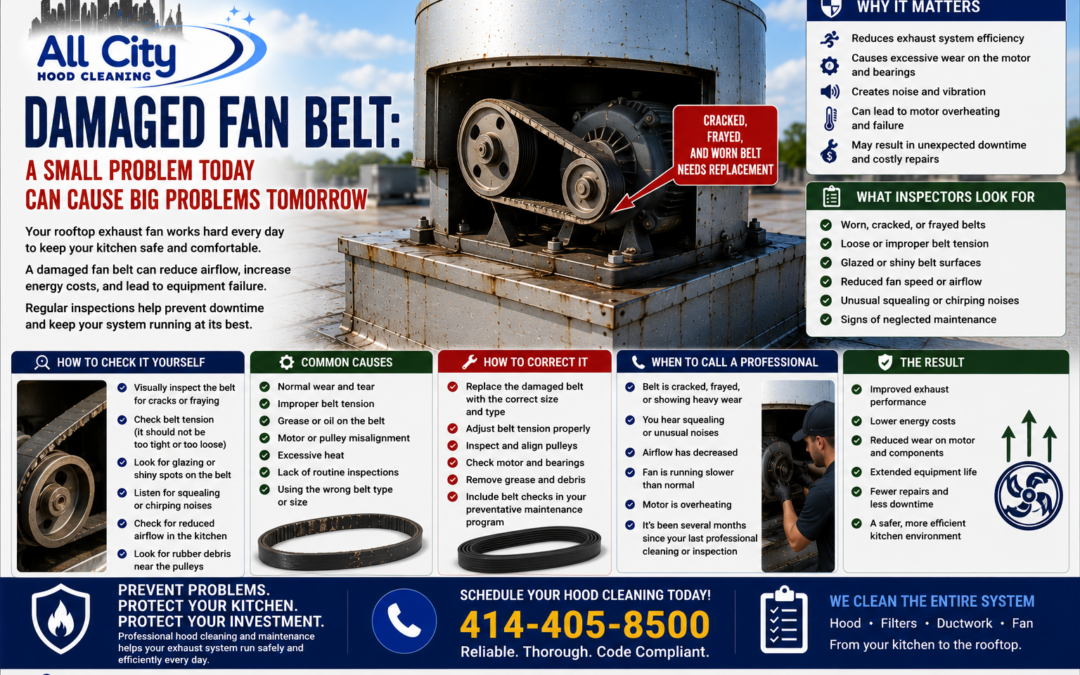
Damaged Fan Belt: Why It Can Affect Your Commercial Kitchen Exhaust System
Your commercial kitchen exhaust fan plays a critical role in maintaining a safe and comfortable cooking environment. It continuously removes heat, smoke, grease-laden vapors, and cooking odors from the kitchen. While many operators focus on cleaning the hood, filters, and ductwork, one mechanical component often goes unnoticed until a problem develops: the fan belt.
Many commercial rooftop exhaust fans use a belt-driven system to transfer power from the motor to the fan blades. Over time, this belt can wear out, crack, fray, loosen, or even break. A damaged fan belt can reduce airflow, place extra strain on the motor, and negatively impact the performance of the entire exhaust system.
Whether you operate a restaurant, school cafeteria, hospital, hotel, nursing home, brewery, casino, church kitchen, food truck, or another commercial cooking facility, routine inspections of your exhaust fan can help identify worn belts before they cause costly downtime.
Why It Matters
The fan belt is responsible for turning the exhaust fan blades at the proper speed. If the belt becomes worn or damaged, the fan may not move enough air to effectively ventilate the kitchen.
A damaged fan belt can:
- Reduce exhaust airflow.
- Cause the fan to operate inefficiently.
- Increase strain on the motor.
- Create squealing or chirping noises.
- Lead to overheating of the motor.
- Reduce the lifespan of the exhaust fan.
- Result in unexpected equipment failure.
Replacing a worn belt is usually much less expensive than repairing a damaged motor or replacing the entire fan.
What Inspectors Look For
Although fire inspectors typically do not remove equipment covers, they may notice signs that indicate the exhaust fan is not operating properly.
Professional hood cleaning technicians and maintenance personnel may observe:
- Reduced fan speed.
- Unusual squealing or belt noise.
- Loose or worn belts.
- Cracked or frayed belt material.
- Improper belt tension.
- Reduced ventilation performance.
- Evidence of neglected preventative maintenance.
A properly maintained exhaust fan helps demonstrate that the entire ventilation system is being cared for.
How To Check It Yourself
If rooftop access is available and can be performed safely, visually inspect the exhaust fan during routine maintenance.
Watch for:
- Cracks or fraying on the belt.
- Belt glazing or shiny surfaces.
- Loose belt tension.
- Squealing noises during startup.
- Reduced airflow inside the kitchen.
- Visible belt wear or missing pieces.
- Dust or rubber debris near the pulleys.
Never inspect or adjust a fan belt while the equipment is operating.
How To Correct It
If a damaged fan belt is found:
- Replace the belt with the manufacturer’s recommended size and type.
- Inspect pulleys for wear or damage.
- Adjust belt tension properly.
- Check motor alignment.
- Inspect bearings and other moving components.
- Include fan belt inspections in your preventative maintenance program.
- Continue following a routine professional hood cleaning schedule.
Regular maintenance helps prevent unexpected equipment failures and improves overall system performance.
When To Call A Professional
You should contact a professional hood cleaning or commercial exhaust system contractor if:
- The fan belt is cracked, frayed, or broken.
- The exhaust fan makes squealing noises.
- Airflow has noticeably decreased.
- The fan motor appears to be working harder than normal.
- You’re preparing for a fire or insurance inspection.
- It has been several months since your last professional hood cleaning or mechanical inspection.
A qualified technician can inspect the rooftop exhaust fan, replace worn belts, and identify other maintenance issues that could affect the performance of your commercial kitchen exhaust system.
Related Articles
Continue learning about commercial kitchen exhaust system maintenance:
- Fan Vibration
- Loose Fan Housing
- Excessive Grease on the Exhaust Fan
- Fan Can't Be Opened for Cleaning
- Missing Hinge Kit
- Grease Containment Overflowing
- Roof Grease Stains
- Understanding NFPA 96 Hood Cleaning Guidelines
- Top 50 Commercial Kitchen Fire Safety Issues That Can Lead to Inspection Violations
Schedule Service
A damaged fan belt may seem like a minor mechanical issue, but it can significantly reduce the performance of your commercial kitchen exhaust system. Routine inspections and preventative maintenance help identify worn belts before they lead to equipment failure or reduced ventilation.
All City Hood Cleaning proudly provides professional commercial kitchen hood cleaning services throughout Wisconsin for restaurants, schools, hospitals, nursing homes, hotels, breweries, casinos, food trucks, churches, manufacturing facilities, and many other commercial kitchens.
Our experienced technicians clean the entire kitchen exhaust system, including the hood, grease filters, ductwork, and rooftop exhaust fan. During every service, we inspect for maintenance concerns such as damaged fan belts, excessive grease buildup, vibration, and other issues that may affect safety, efficiency, and inspection readiness.
Contact All City Hood Cleaning today at 414-405-8500 for a free estimate and let us help keep your commercial kitchen exhaust system operating safely, efficiently, and reliably.