
No Documented Maintenance Schedule: Why Every Commercial Kitchen Needs a Preventive Maintenance Plan
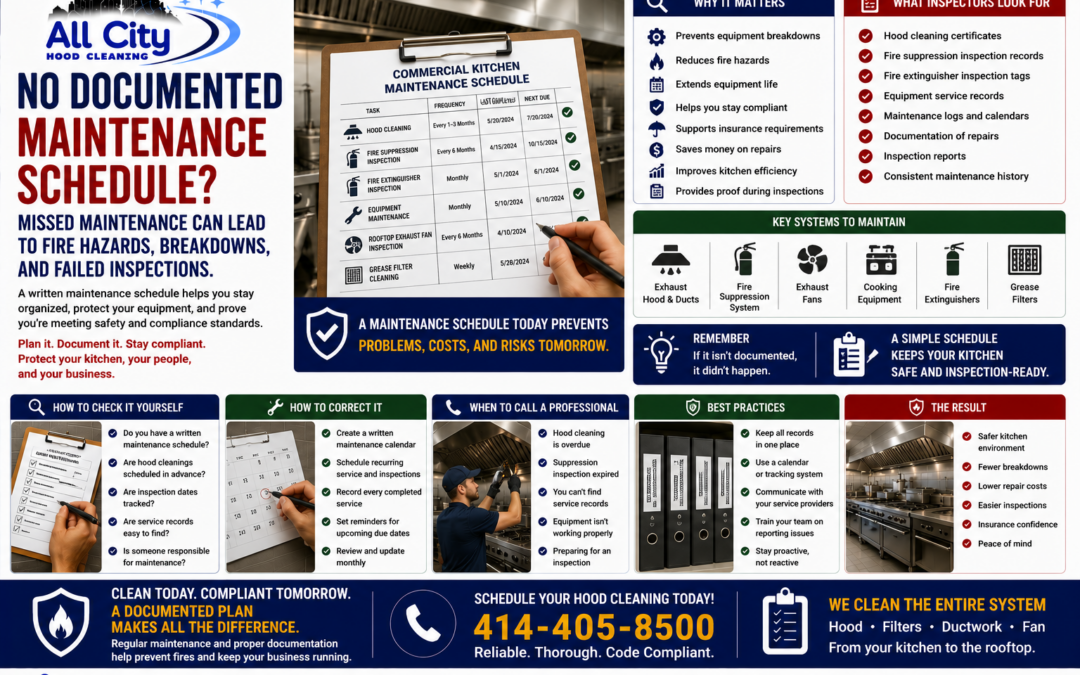
Running a commercial kitchen involves much more than preparing great food. Equipment, fire protection systems, ventilation components, and cleaning schedules all require regular attention to keep the kitchen operating safely and efficiently. One issue frequently discovered during inspections is no documented maintenance schedule.
Even if equipment is serviced occasionally, the lack of a written maintenance plan makes it difficult to demonstrate that routine inspections, hood cleaning, and preventative maintenance are being performed consistently. Without documentation, important tasks can be forgotten, delayed, or overlooked, increasing the risk of equipment failures, fire hazards, and inspection violations.
Whether you operate a restaurant, school cafeteria, hospital, hotel, nursing home, brewery, casino, church kitchen, food truck, convenience store, manufacturing cafeteria, or another commercial cooking facility, maintaining a documented maintenance schedule helps protect your employees, customers, equipment, and investment.
Why It Matters
Commercial kitchens contain many systems that require regular maintenance, including exhaust hoods, ductwork, rooftop exhaust fans, fire suppression systems, grease filters, cooking equipment, and fire extinguishers.
Without a documented maintenance schedule, businesses may experience:
- Missed hood cleaning appointments.
- Expired fire suppression inspections.
- Delayed equipment repairs.
- Increased grease buildup.
- Unexpected equipment breakdowns.
- Higher repair and replacement costs.
- Failed health, fire, or insurance inspections.
- Reduced equipment life.
A written maintenance plan helps ensure important safety tasks are completed on time.
What Inspectors Look For
Fire inspectors and insurance representatives often review maintenance records in addition to inspecting equipment.
They may ask for:
- Hood cleaning schedules.
- Hood cleaning certificates.
- Fire suppression inspection records.
- Fire extinguisher inspection documentation.
- Preventative maintenance logs.
- Equipment service records.
- Inspection reports.
- Maintenance calendars or checklists.
Well-organized documentation demonstrates a commitment to safety and routine maintenance.
How To Check It Yourself
Kitchen managers should review their maintenance program regularly.
Ask yourself:
- Do you have a written maintenance schedule?
- Are hood cleanings scheduled in advance?
- Are fire suppression inspections tracked?
- Are equipment service dates documented?
- Do you maintain inspection records?
- Is someone responsible for monitoring upcoming service dates?
If these questions cannot be answered easily, your maintenance program may need improvement.
How To Correct It
If your facility does not have a documented maintenance schedule:
- Create a written maintenance calendar.
- Schedule recurring hood cleanings.
- Track fire suppression inspections.
- Record equipment service dates.
- Store maintenance reports in one location.
- Set reminders for upcoming inspections.
- Review the schedule monthly with management.
- Update records after every completed service.
A simple maintenance program can prevent costly emergencies while improving inspection readiness.
When To Call A Professional
Contact qualified service providers if:
- Your hood cleaning is overdue.
- Fire suppression inspections have expired.
- Equipment maintenance has fallen behind.
- You cannot locate previous service records.
- You’re preparing for a fire, health, or insurance inspection.
- You need help determining the proper hood cleaning frequency.
Professional hood cleaning companies can help establish an appropriate cleaning schedule based on your cooking volume and the recommendations found in NFPA 96.
Related Articles
Continue learning about commercial kitchen safety and compliance:
- Missing Hood Cleaning Certificate
- Missing Service Records
- Expired Inspection Tags
- Poor Housekeeping
- Grease Accumulation Inside Ducts
- Missing Class K Fire Extinguisher
- Understanding NFPA 96 Hood Cleaning Guidelines
- Commercial Kitchen Fire Suppression System Inspections
- Top 50 Commercial Kitchen Fire Safety Issues That Can Lead to Inspection Violations
Schedule Service
A documented maintenance schedule is one of the easiest ways to keep your commercial kitchen organized, compliant, and operating efficiently. Regular inspections and professional hood cleaning help reduce fire hazards while extending the life of your kitchen equipment.
All City Hood Cleaning proudly provides professional commercial kitchen hood cleaning services throughout Wisconsin for restaurants, schools, hospitals, nursing homes, hotels, breweries, casinos, food trucks, churches, manufacturing facilities, and many other commercial kitchens.
Our experienced technicians thoroughly clean your commercial kitchen exhaust system, including the hood, grease filters, ductwork, and rooftop exhaust fan. After every service, we provide detailed documentation and maintenance recommendations to help you stay organized and prepared for future inspections.
Contact All City Hood Cleaning today at 414-405-8500 for a free estimate and let us help you build a maintenance schedule that keeps your commercial kitchen clean, safe, compliant, and inspection-ready.