
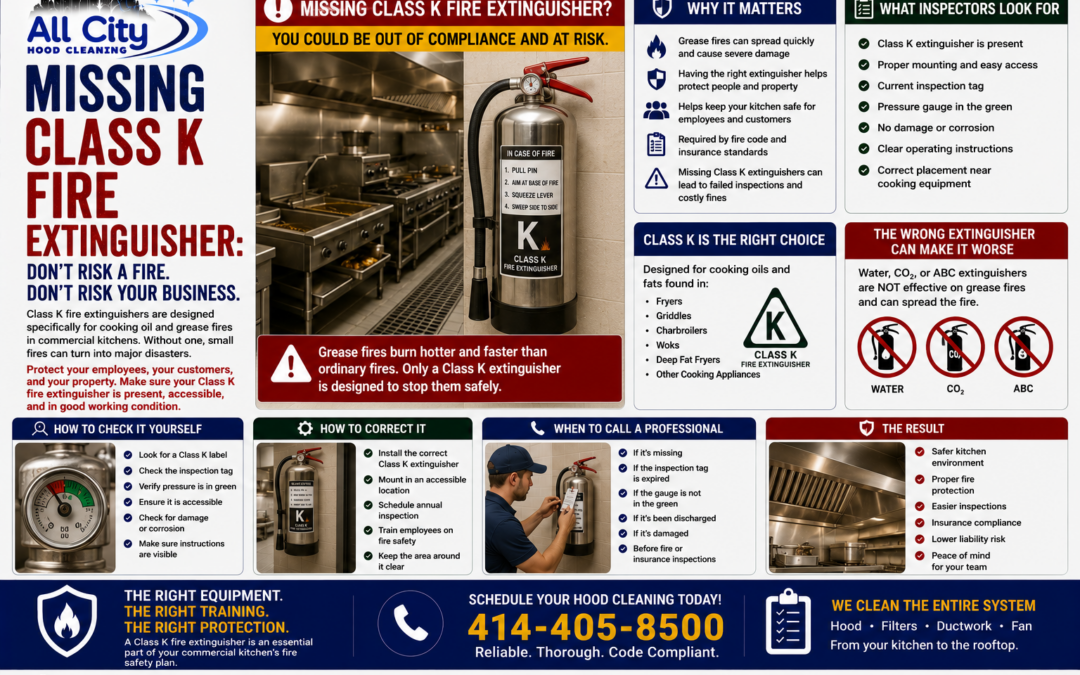
Missing Class K Fire Extinguisher: Why Every Commercial Kitchen Needs the Right Fire Protection
Commercial kitchens face unique fire risks because they use high-temperature cooking equipment and large amounts of cooking oils and fats. While a kitchen hood fire suppression system provides automatic protection, it is only one part of a complete fire safety plan. Every commercial kitchen should also have a readily accessible Class K fire extinguisher designed specifically for cooking oil and grease fires.
A missing Class K fire extinguisher is a common issue identified during fire inspections and can place employees, customers, and property at greater risk. Unlike multipurpose extinguishers, Class K extinguishers are specifically designed to suppress fires involving vegetable oils, animal fats, and commercial cooking appliances.
Whether you operate a restaurant, school cafeteria, hospital, hotel, nursing home, brewery, casino, church kitchen, food truck, or another commercial cooking facility, maintaining the proper fire extinguisher is an essential part of keeping your kitchen safe and compliant.
Why It Matters
Commercial cooking equipment can generate extremely high temperatures, and grease fires behave much differently than ordinary combustible fires. Using the wrong extinguisher can make a grease fire worse or fail to extinguish it effectively.
A missing Class K fire extinguisher can:
- Leave employees without the proper firefighting equipment.
- Increase the risk of fire spreading.
- Result in fire code violations.
- Raise concerns during insurance inspections.
- Delay emergency response.
- Increase property damage.
- Put employees and customers at greater risk.
Having the correct extinguisher available provides an additional layer of protection when used by trained personnel.
What Inspectors Look For
Fire inspectors routinely verify that commercial kitchens have the proper portable fire extinguishers installed.
They may check for:
- A properly mounted Class K fire extinguisher.
- Easy access without obstructions.
- Current inspection and maintenance tags.
- Proper pressure gauge readings.
- Visible operating instructions.
- No physical damage or corrosion.
- Correct placement near cooking equipment while maintaining a safe operating distance.
If a required extinguisher is missing, damaged, or overdue for inspection, corrective action may be required before the kitchen passes inspection.
How To Check It Yourself
Kitchen managers should inspect fire extinguishers as part of their regular safety routine.
Look for:
- A Class K label on the extinguisher.
- An inspection tag showing current service.
- A pressure gauge in the operating range.
- Easy access without equipment or storage blocking it.
- No dents, rust, or visible damage.
- Clearly visible operating instructions.
Employees should know the location of the extinguisher but should only attempt to use it if they have been trained and it is safe to do so.
How To Correct It
If your Class K fire extinguisher is missing:
- Install a properly rated Class K extinguisher.
- Mount it in an accessible location.
- Schedule annual inspection and maintenance.
- Replace damaged or expired extinguishers.
- Train employees on emergency fire procedures.
- Keep the surrounding area free from obstructions.
Routine inspections help ensure your fire protection equipment remains ready when it’s needed.
When To Call A Professional
Contact a licensed fire protection company if:
- Your Class K extinguisher is missing.
- The inspection tag has expired.
- The pressure gauge is outside the operating range.
- The extinguisher has been discharged.
- The unit is damaged or corroded.
- You’re preparing for a fire or insurance inspection.
- You’re unsure whether your kitchen has the correct extinguisher.
A qualified fire protection contractor can recommend the proper extinguisher, inspect existing equipment, and ensure your kitchen meets applicable fire safety requirements.
Related Articles
Continue learning about commercial kitchen fire safety:
- Missing Service Records
- Gas Shutoff Issues
- Manual Shutoffs Blocked
- Damaged Pull Station
- Pull Station Obstructed
- Missing Fusible Links
- Blocked Nozzles
- Understanding NFPA 96 Hood Cleaning Guidelines
- Top 50 Commercial Kitchen Fire Safety Issues That Can Lead to Inspection Violations
Schedule Service
A Class K fire extinguisher is an important part of your commercial kitchen’s overall fire protection strategy. Combined with regular hood cleaning, fire suppression system maintenance, and employee training, it helps create a safer working environment.
All City Hood Cleaning proudly provides professional commercial kitchen hood cleaning services throughout Wisconsin for restaurants, schools, hospitals, nursing homes, hotels, breweries, casinos, food trucks, churches, manufacturing facilities, and many other commercial kitchens.
During every hood cleaning service, our experienced technicians inspect the visible condition of your kitchen exhaust system and notify you if we observe missing or obstructed fire safety equipment, excessive grease buildup, or other visible concerns that may affect inspection readiness. We recommend that portable fire extinguishers and fire suppression systems always be inspected and maintained by licensed fire protection professionals.
Contact All City Hood Cleaning today at 414-405-8500 for a free estimate and let us help keep your commercial kitchen clean, safe, compliant, and ready for its next inspection.