
Commercial Kitchen Exhaust Corrosion: Why It Should Never Be Ignored
Commercial kitchen exhaust systems are built to withstand years of exposure to heat, grease, moisture, and continuous operation. However, even durable stainless steel and metal components can eventually develop corrosion if the system is not properly maintained or is exposed to harsh conditions over time.
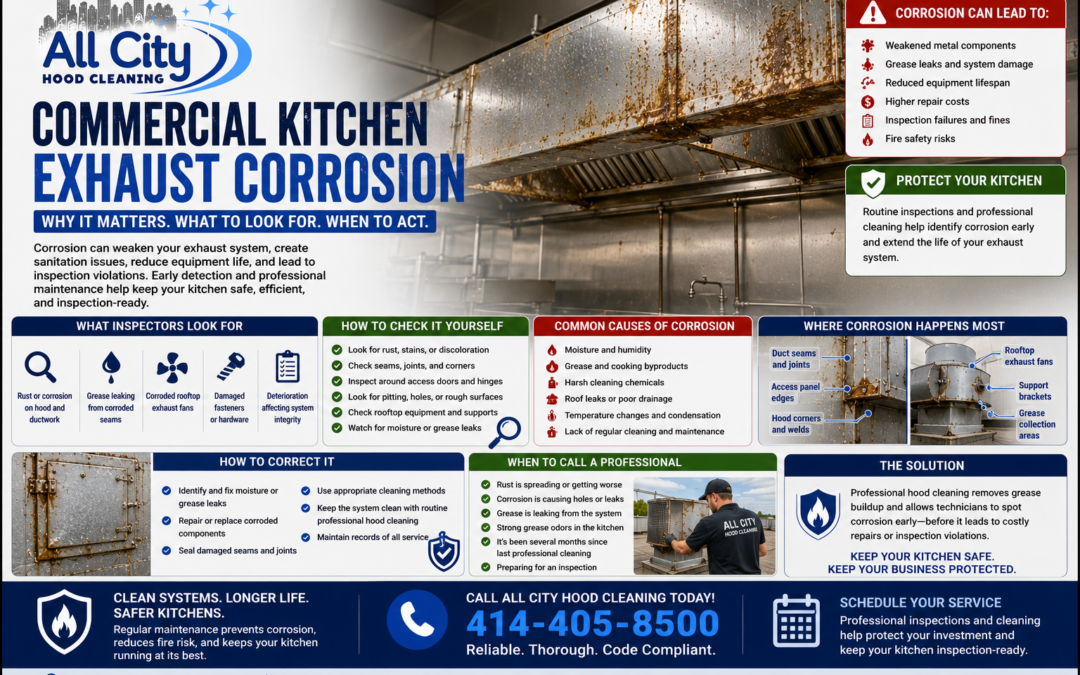
Corrosion is more than just a cosmetic issue. It can weaken exhaust system components, create sanitation concerns, reduce equipment life, and become a point of concern during fire safety inspections. Whether you operate a restaurant, school cafeteria, hospital, hotel, nursing home, casino, brewery, church kitchen, or food truck, recognizing the early signs of corrosion can help prevent more costly repairs in the future.
Routine inspections and professional hood cleaning services are important parts of identifying corrosion before it affects the performance and safety of your commercial kitchen exhaust system.
Why It Matters
Commercial kitchen exhaust systems remove heat, smoke, grease-laden vapors, and cooking byproducts from the cooking area. During normal operation, the system is constantly exposed to moisture, grease, cleaning chemicals, and temperature changes.
Over time, these conditions can contribute to corrosion on hood components, ductwork, access panels, exhaust fans, and supporting hardware.
Corrosion may:
- Weaken metal components.
- Create holes or gaps where grease can escape.
- Reduce the lifespan of the exhaust system.
- Make equipment more difficult to clean.
- Lead to expensive repairs if left untreated.
- Raise concerns during fire safety inspections.
Addressing corrosion early helps extend the life of the system and supports safer kitchen operations.
What Inspectors Look For
During a commercial kitchen inspection, fire inspectors often examine the visible condition of the exhaust system.
They may look for:
- Rust or corrosion on hood surfaces.
- Corroded ductwork.
- Rust around access panels or hinges.
- Corrosion on rooftop exhaust fans.
- Damaged fasteners or hardware.
- Grease leaking from corroded seams.
- Signs that deterioration has affected the integrity of the exhaust system.
Visible corrosion may indicate that additional maintenance or repairs are needed.
How To Check It Yourself
Kitchen managers should include corrosion checks as part of their regular maintenance routine.
Inspect for:
- Rust spots or discoloration.
- Bubbling or peeling finishes.
- Corroded screws, bolts, or hinges.
- Pitting or rough metal surfaces.
- Moisture stains around ductwork.
- Rust near rooftop exhaust equipment.
- Grease leaking from damaged seams.
Pay close attention to areas where moisture tends to collect, including around rooftop penetrations, access panels, and duct joints.
How To Correct It
If corrosion is discovered:
- Document the affected areas.
- Determine whether moisture or grease leaks are contributing to the problem.
- Replace severely corroded hardware or components.
- Repair damaged seams before grease begins leaking.
- Keep the exhaust system clean through regular professional hood cleaning.
- Address roof leaks or condensation issues promptly.
Small areas of corrosion are generally easier and less expensive to repair than widespread deterioration.
When To Call A Professional
Contact a professional hood cleaning company if:
- Rust is spreading across hood or duct surfaces.
- Corrosion has damaged seams or access panels.
- Grease is leaking from corroded areas.
- You notice holes or weakened metal.
- You’re preparing for a fire or insurance inspection.
- Your exhaust system has not been professionally inspected in several months.
A qualified technician can inspect the entire kitchen exhaust system and recommend cleaning, repairs, or component replacement if necessary.
Related Articles
Continue learning about commercial kitchen exhaust system maintenance:
- Corrosion or Damaged Hood Components
- Damaged Duct Insulation
- Grease Leaking From Duct Seams
- Grease on Exterior Duct Surfaces
- Missing Duct Access Panels
- Access Doors Painted Shut
- Understanding NFPA 96 Hood Cleaning Guidelines
- Top 50 Commercial Kitchen Fire Safety Issues That Can Lead to Inspection Violations
Schedule Service
Corrosion doesn’t happen overnight, but once it begins, it can shorten the life of your commercial kitchen exhaust system if left unaddressed. Regular inspections and professional hood cleaning help identify corrosion early, keeping your kitchen safer and reducing the likelihood of costly repairs.
All City Hood Cleaning proudly provides professional commercial kitchen hood cleaning services throughout Wisconsin for restaurants, schools, hospitals, nursing homes, hotels, breweries, casinos, churches, food trucks, manufacturing facilities, and many other commercial kitchens.
Our experienced technicians inspect and clean the entire exhaust system, helping identify maintenance concerns before they become major problems and helping your business stay inspection-ready.
Contact All City Hood Cleaning today at 414-405-8500 for a free estimate and let us help protect your commercial kitchen exhaust system from grease buildup, corrosion, and unnecessary repairs.