
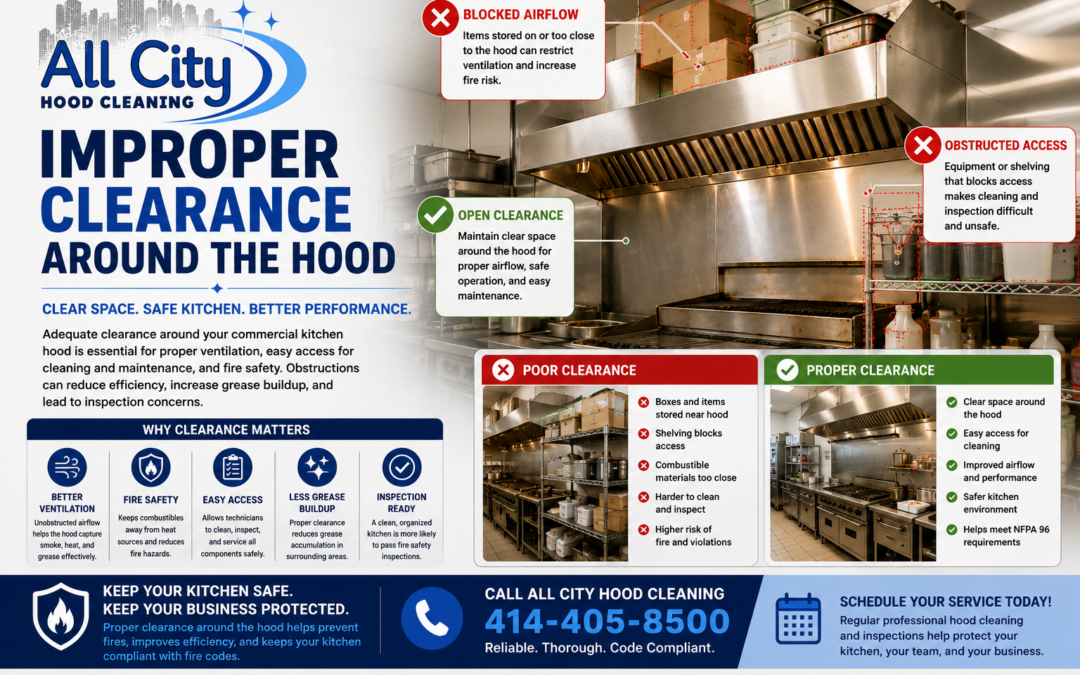
Improper Clearance Around the Hood: Why Adequate Space Is Critical for Commercial Kitchen Safety
A commercial kitchen exhaust hood is designed to safely capture heat, smoke, steam, and grease-laden vapors generated during cooking. To perform as intended, the hood must have adequate clearance around it so air can flow properly, equipment can operate safely, and maintenance technicians can access the system when needed.
Improper clearance around the hood is a common issue that can develop over time as kitchens evolve. Shelving, storage containers, decorations, equipment, and even temporary supplies are sometimes placed too close to the hood or exhaust system. While these items may seem harmless, they can interfere with ventilation, create cleaning challenges, and become inspection concerns.
Maintaining proper clearance helps improve both the safety and efficiency of your commercial kitchen.
Why It Matters
Commercial kitchen hoods are engineered to capture cooking vapors before they spread throughout the kitchen. Blocking airflow or restricting access around the hood can reduce the effectiveness of the ventilation system and make routine maintenance more difficult.
Improper clearance may:
- Restrict airflow into the hood.
- Reduce smoke and grease capture efficiency.
- Make professional hood cleaning more difficult.
- Block access for inspections or maintenance.
- Increase grease accumulation in surrounding areas.
- Create additional fire safety concerns if combustible materials are stored too close to cooking equipment.
Keeping the area around the hood clear helps the exhaust system operate as intended while allowing technicians to safely inspect and service the equipment.
What Inspectors Look For
During commercial kitchen inspections, fire inspectors often evaluate the overall condition of the cooking area, not just the hood itself.
They may observe:
- Boxes or supplies stored near the hood.
- Combustible materials located too close to cooking equipment.
- Shelving or equipment blocking access to the hood.
- Decorations or signs attached to the hood.
- Obstructed access to fire suppression pull stations.
- Areas where maintenance or cleaning cannot be performed safely.
Inspectors appreciate kitchens that are organized, accessible, and free from unnecessary obstructions.
How To Check It Yourself
Kitchen managers should routinely inspect the area surrounding the hood system.
Look for:
- Items stored on top of the hood.
- Boxes, paper products, or supplies near cooking equipment.
- Equipment blocking access to hood filters.
- Decorations, cords, or signage attached to the hood.
- Objects preventing technicians from reaching access panels or ductwork.
- Obstructions around manual fire suppression pull stations.
Walk around the hood from multiple angles to ensure employees and service technicians can safely access all components.
How To Correct It
Maintaining proper clearance is often one of the easiest maintenance issues to correct.
Good practices include:
- Remove unnecessary items stored around the hood.
- Keep combustible materials away from cooking equipment.
- Maintain clear access to filters and access panels.
- Avoid attaching signs, decorations, or equipment to the hood.
- Keep emergency shutoffs and pull stations unobstructed.
- Review kitchen layouts periodically as equipment changes.
Simple housekeeping practices can help prevent larger safety and inspection issues.
When To Call A Professional
Consider contacting a professional hood cleaning company if:
- Access to the hood system has become restricted.
- Grease is accumulating around stored items.
- Equipment changes require modifications to the hood area.
- You’re preparing for a fire inspection.
- You are unsure whether your kitchen layout allows proper maintenance access.
- Your hood cleaning contractor recommends changes to improve accessibility.
A professional can evaluate your exhaust system and identify conditions that may affect cleaning quality, ventilation performance, or inspection readiness.
Related Articles
Continue learning about commercial kitchen fire safety:
- Loose Hood Panels
- Missing Access Panels
- Corrosion or Damaged Hood Components
- Grease Buildup Behind Filters
- Grease Dripping From Hood Seams
- Missing or Damaged Grease Filters
- Understanding NFPA 96 Hood Cleaning Guidelines
- Top 50 Commercial Kitchen Fire Safety Issues That Can Lead to Inspection Violations
Schedule Service
Keeping the area around your commercial kitchen hood clear is an important part of maintaining a safe, efficient, and inspection-ready kitchen. Regular professional hood cleaning can also help identify maintenance concerns before they become larger problems.
All City Hood Cleaning proudly provides commercial kitchen hood cleaning services throughout Wisconsin for restaurants, schools, hospitals, nursing homes, hotels, breweries, casinos, food trucks, churches, manufacturing facilities, and many other commercial kitchens.
Our experienced technicians thoroughly clean commercial kitchen exhaust systems while helping identify issues that may affect safety, ventilation, and code compliance.
Contact All City Hood Cleaning today at 414-405-8500 for a free estimate and let us help keep your commercial kitchen clean, safe, and ready for your next inspection.